
Quick Answer: The average property manager spends 15–20+ hours per week on repetitive tasks that AI can now handle automatically — guest messaging, scheduling, pricing updates, and operational coordination. According to 2026 industry data, operators using AI-powered platforms save up to 10+ hours per week per team member.
Ask any property manager where their time goes and the answer is almost always the same: answering the same guest questions, coordinating cleaners, updating calendars, sending check-in instructions, chasing reviews, fixing pricing manually.
The irony is that most of these tasks feel urgent — a guest message needs a response now — but they don't actually require you. They require information that already exists in your systems and a response that follows a predictable pattern.
In 2026, there's hard data on exactly how much time this costs. And the number is striking enough that every operator managing more than a handful of properties should see it.
The Time Cost of Manual Property Management: What the Data Shows
2–10+ Hours Per Week, Per Team Member
HotelTechReport's 2026 Property Management Systems Impact Study surveyed 450 experienced operators globally. The findings: 89% of property managers using modern AI-powered platforms report saving between 2 and 10 hours per week from operational tasks alone. 17% — nearly one in five — save more than 10 hours per week.
At 10 hours per week saved, that's 500 hours annually, per team member, reclaimed from tasks that didn't require human judgment in the first place.
The Tripling of AI Adoption Is a Signal
The fact that AI adoption in property management tripled in a single year — from 20% to 58% of companies, according to Buildium's 2026 Industry Report — doesn't happen without a clear underlying reason. Operators aren't adopting AI because it's trendy. They're adopting it because the time cost of not adopting it is becoming impossible to ignore.
AI Adopters Are Growing 3x Faster
AppFolio's 2026 Property Management Benchmark Report found that firms with broad AI adoption expect 31% portfolio growth this year — nearly three times the 12% projected by non-AI users. That growth gap is, in large part, a time gap: operators who've automated the repetitive work have capacity to take on more properties. Operators still doing it manually hit a ceiling.
Where the Hours Actually Go: A Breakdown by Task
The time drain isn't one big problem — it's dozens of small ones that add up. Here's where property managers consistently report losing the most hours:
Guest Communication: 5–8 Hours Per Week
For a portfolio of 20+ properties at reasonable occupancy, the volume of inbound guest messages is relentless. Pre-arrival questions, WiFi issues, early check-in requests, late-night noise complaints, mid-stay requests, checkout reminders — each takes a few minutes to respond to, and they arrive at all hours.
Across 20 properties with average guest communication volume, this adds up to 5–8 hours of message management per week — often fragmented across evenings and weekends because guests don't keep business hours.
Cleaning and Operations Coordination: 3–5 Hours Per Week
Coordinating turnovers is deceptively time-consuming. Someone has to confirm checkouts, assign cleaning crews, communicate timing, handle last-minute changes, and verify completion before the next guest arrives. For portfolios with high turnover rates, this coordination layer consumes several hours per week — and the stakes are high. A missed or delayed clean creates a guest experience problem that cascades into reviews.
Pricing Management: 2–4 Hours Per Week
Manual pricing management is time-consuming and inherently imprecise. Checking competitor rates, adjusting for upcoming local events, responding to booking velocity — doing this thoughtfully for 20+ properties takes hours. And every hour not spent on pricing is an hour of potential revenue optimization left on the table.
Calendar and Channel Management: 2–3 Hours Per Week
Keeping calendars synced across Airbnb, Vrbo, Booking.com, and a direct booking site — with accurate pricing and availability — requires constant attention. Gaps, double-bookings, and rate inconsistencies all require manual intervention.
Owner Reporting and Communication: 2–4 Hours Per Week
Owner relationships require regular communication: occupancy updates, revenue reporting, maintenance flags. For managers with multiple owners, this reporting cadence eats several hours per week if done manually.
Total: 14–24 Hours Per Week
Across these categories, a property manager running 20–50 units manually is likely spending 14–24 hours per week on tasks that don't require human decision-making. That's the equivalent of two full working days — every week — spent on work that AI can handle.
What Those Hours Cost in Real Terms
Time isn't free. Even if you're not paying an employee for those hours (because you're doing them yourself), there's an opportunity cost:
- Hours spent on guest messaging are hours not spent on portfolio growth
- Hours spent on coordination are hours not spent on owner relationships
- Hours spent on manual pricing are hours the system isn't pricing optimally
The hidden cost of manual management isn't just fatigue — it's the ceiling it puts on how many properties you can operate, and at what quality level.
What the Time Recovery Looks Like With AI
When AI handles the routine communication, scheduling, and coordination layer, the time math changes completely:
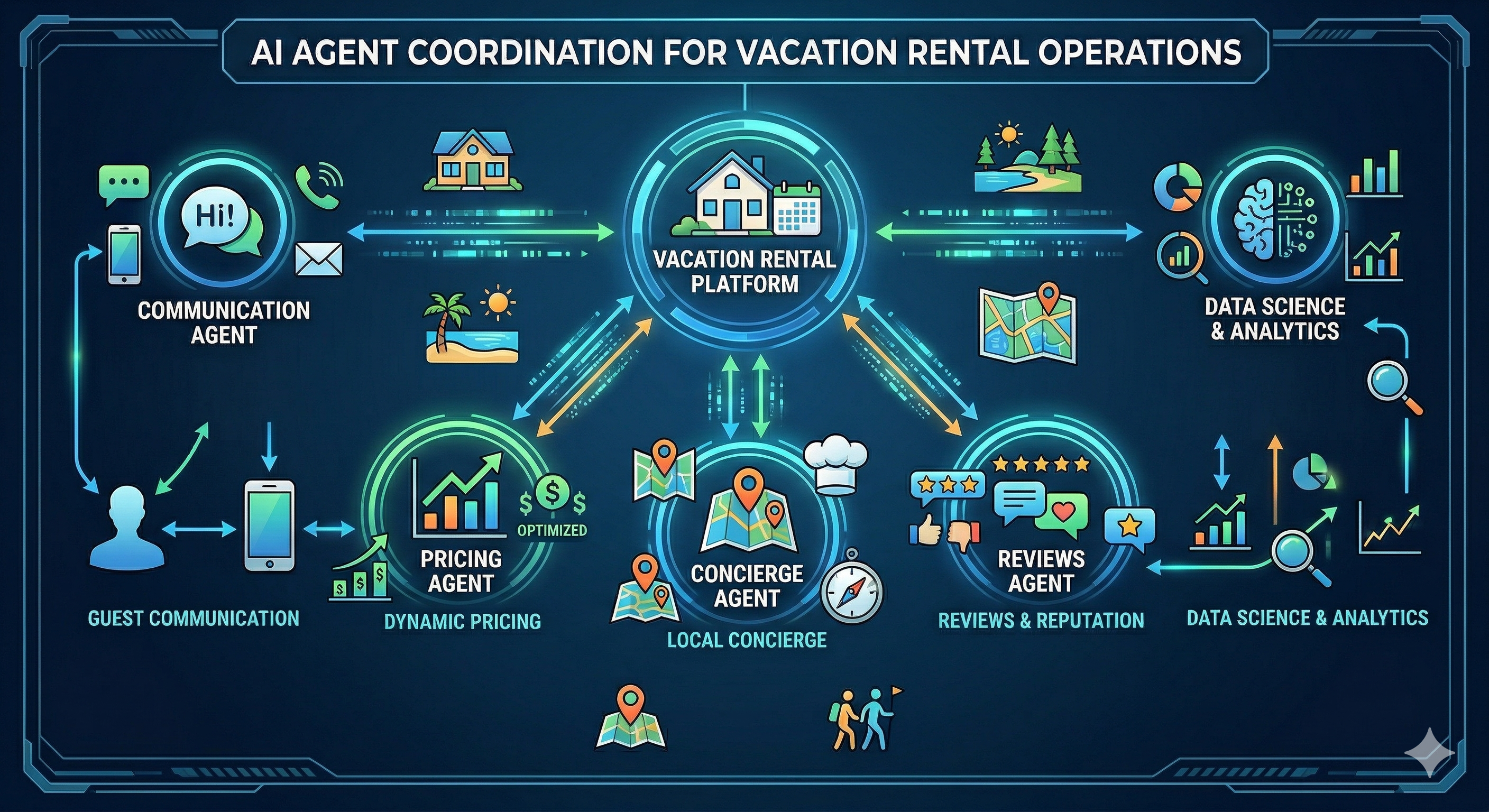
Guest communication: AI handles 70–90% of inbound messages automatically. Your inbox shows only the exceptions that need you.
Operations coordination: Turnovers, cleaning tasks, and access codes trigger automatically from booking events. No manual sequencing.
Pricing: Dynamic pricing updates in real time based on market signals. No manual rate checks required.
Reporting: Automated owner reports generated from live data. No manual compilation.
The hours don't disappear. They move. The work that used to fill your evenings and weekends goes into the machine — and what comes out is capacity to grow, to improve guest experience, and to focus on the decisions that actually require you.
The Property Manager Who Gets Their Time Back
The operators who are growing their portfolios fastest in 2026 aren't the ones working more hours. They're the ones who've stopped spending those hours on coordination and started spending them on the things that actually build a business: relationships with property owners, quality control, strategic decisions about which properties to take on, and delivering a guest experience good enough to generate the kind of reviews that make the next booking easier.
That shift requires one thing: not doing the repetitive work yourself.
How Jurny Helps Property Managers Reclaim Their Time
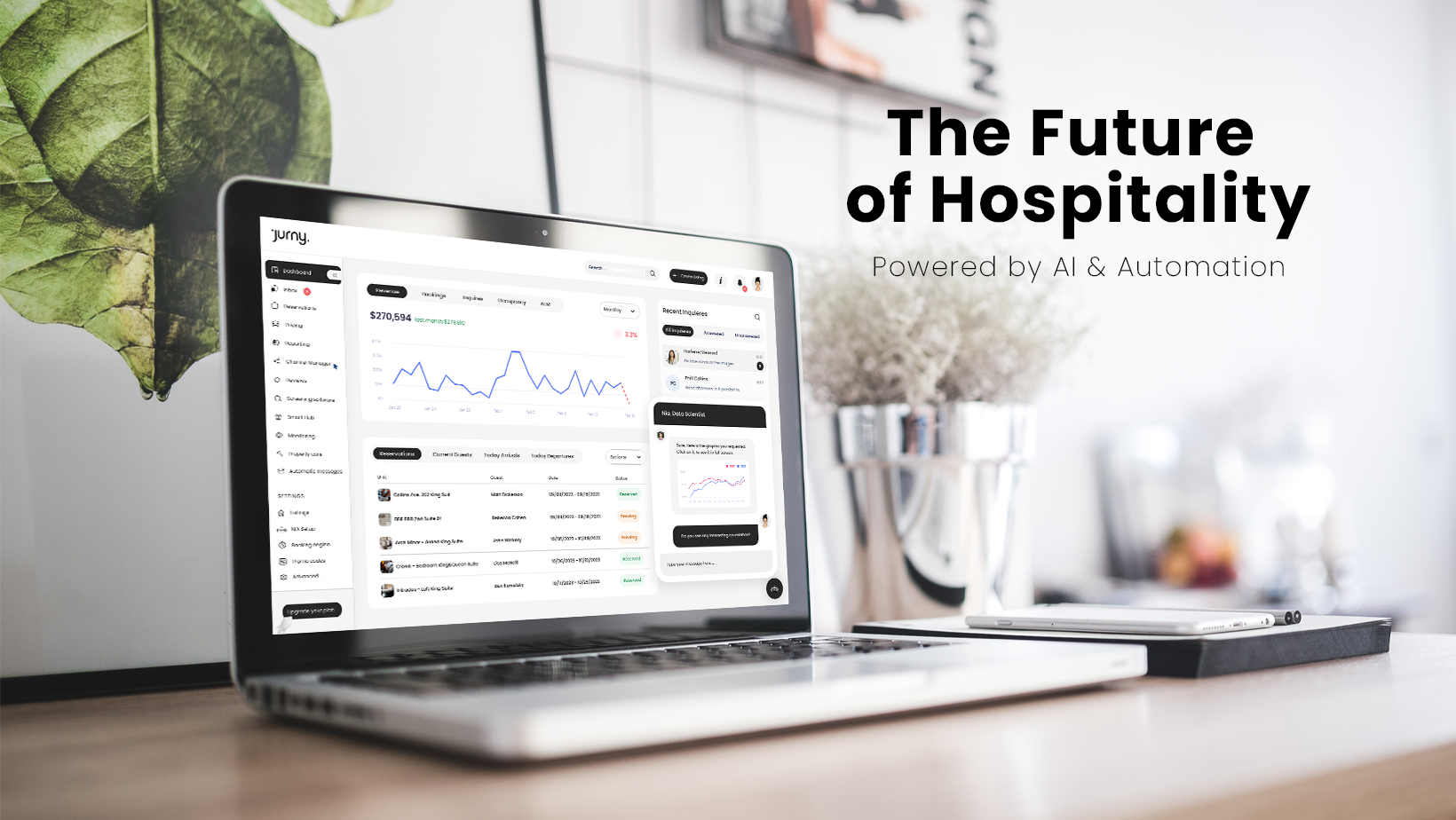
Jurny's platform — built around NIA, its AI engine — is designed to take the repetitive operational layer entirely off your plate. Guest messaging, smart access, and upsell automation all run automatically. The result is a platform where your job is to manage the exceptions and grow the portfolio, not to keep up with an inbox.
Frequently Asked Questions
How many hours per week does a property manager typically spend on repetitive tasks?
Based on 2026 industry data, property managers spend between 14 and 24 hours per week on repetitive operational tasks — guest communication, scheduling, pricing, channel management, and reporting. For portfolios of 20–50 properties, this can represent nearly two full working days per week.
Which repetitive tasks take up the most time in property management?
Guest communication consistently tops the list, consuming 5–8 hours per week for mid-sized portfolios. Operations coordination (cleaning, turnovers, access), pricing management, and owner reporting each add several more hours, bringing the total well into double digits weekly.
How much time can AI save for property managers?
According to HotelTechReport's 2026 PMS study, 89% of operators using AI platforms save 2–10+ hours per week. 17% save more than 10 hours weekly — equivalent to 500+ hours per year, per team member, on tasks that previously required manual effort.
Can a small team manage a large portfolio using AI?
Yes. AI automation is precisely what enables small teams to compete at portfolio sizes that would previously require significantly more staff. A two-person operation managing 60–80 units with the right AI platform can deliver a guest experience and operational standard that rivals much larger management companies.
What tasks should property managers still handle personally even with AI?
Physical inspections, nuanced owner conversations, complex guest disputes, strategic decisions about portfolio growth, and anything requiring local knowledge or relationship management. AI handles the digital and operational coordination layer. Humans handle the rest — and there's a lot less 'rest' when AI is doing its job.
Get Those Hours Back
If you're spending 15+ hours a week on tasks AI can handle, that time is yours to reclaim. See how Jurny does it. Book a demo today! →
Explore Jurny: