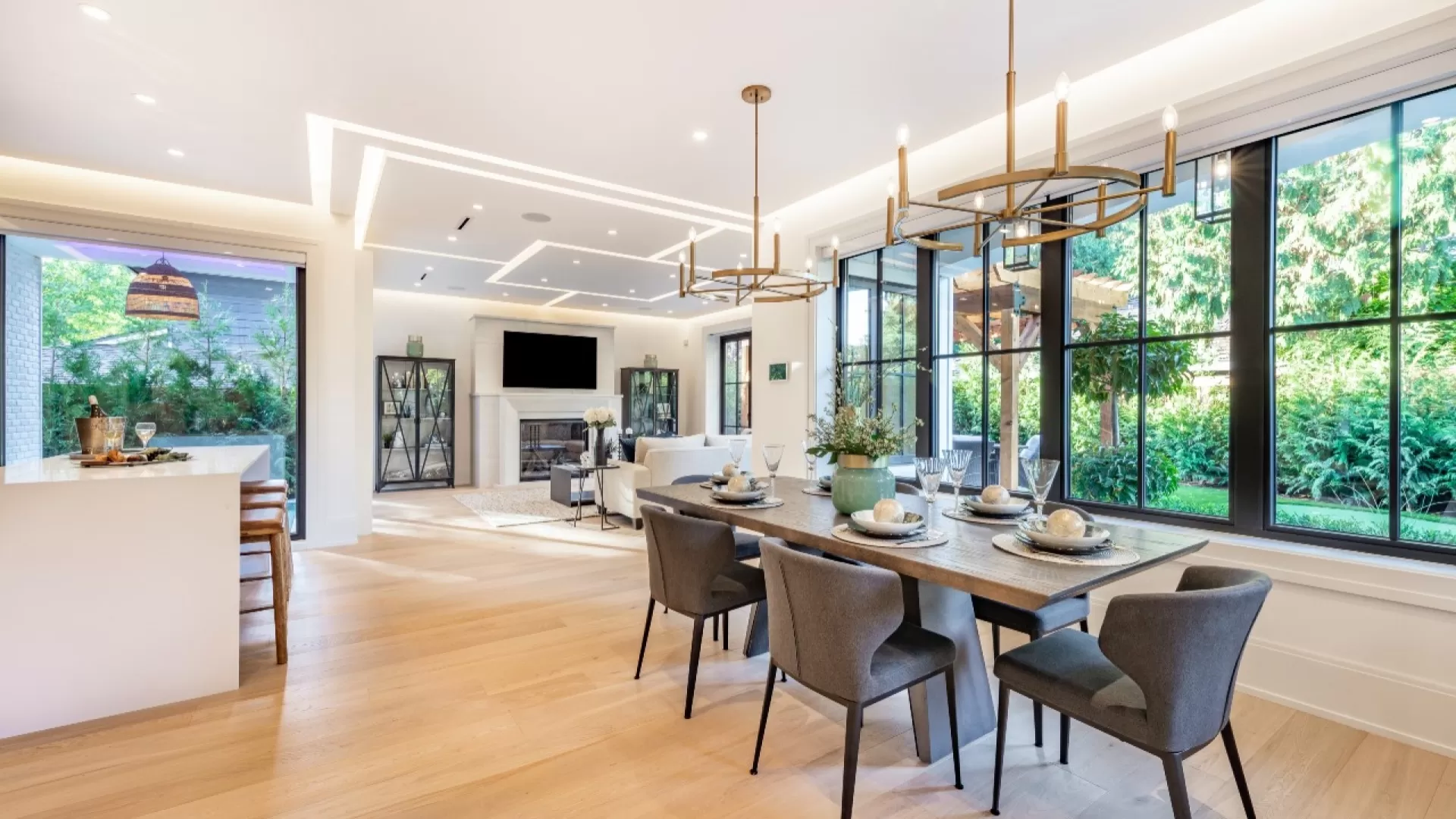
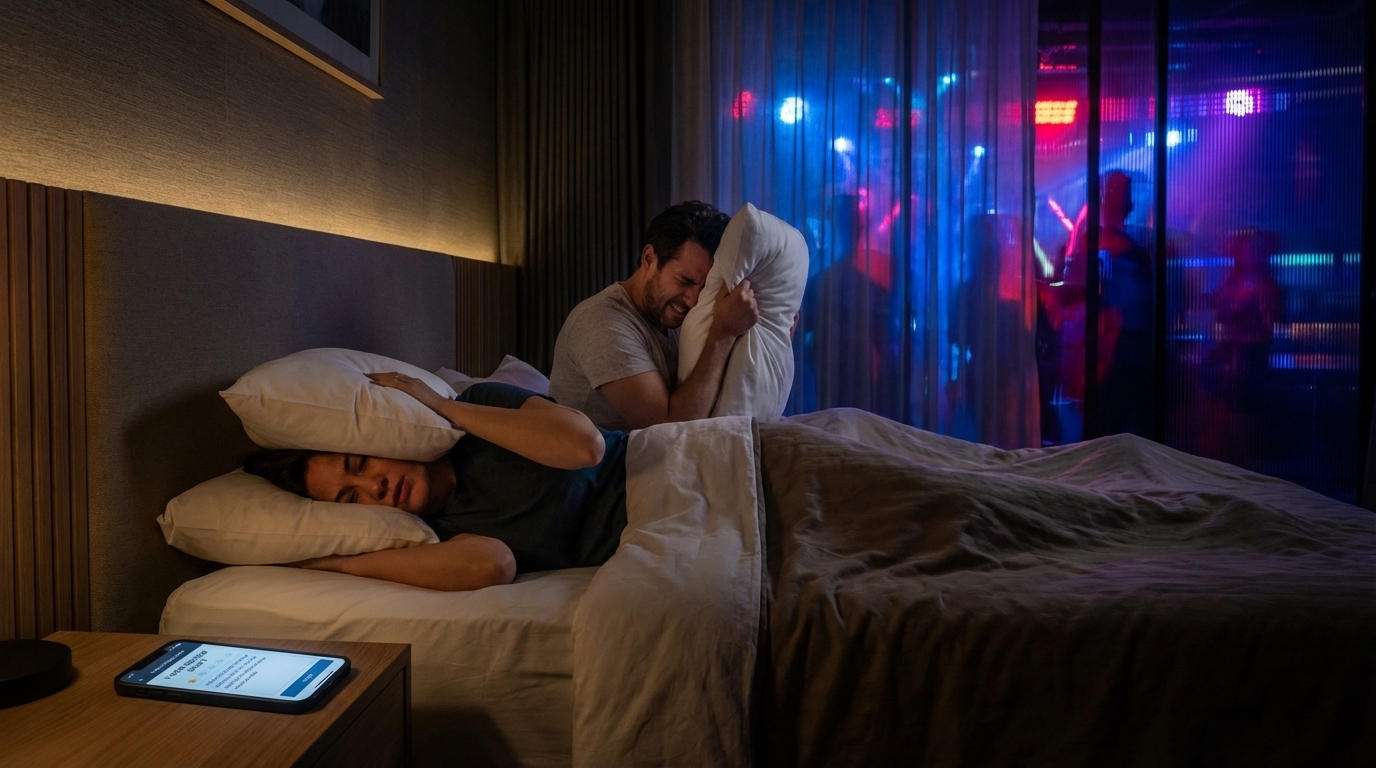
A couple books a peaceful retreat for a long weekend. They have imagined quiet mornings with coffee on the balcony, lazy afternoons reading by the window. Friday night: the bar three doors down starts pumping music at 11 PM. Saturday morning at 7 AM: construction equipment rumbles outside. Monday morning, they leave a review: "Beautiful place but impossible to sleep. Would not recommend. 1 star." The property is gorgeous. The amenities are perfect. The host is responsive. But none of that matters. One bad night of sleep has erased the entire experience in their minds.
TL;DR
Noise complaints in vacation rentals are unique because they are often outside a host's control, but that does not mean the review is. How you disclose, prepare, and respond to noise issues determines whether a noisy stay becomes a 1-star or a 4-star with an honest caveat. Properties that proactively warn guests about potential noise are rated significantly less harshly than those where guests discover noise problems mid-stay.
Why Noise Is the Most Emotionally Charged Complaint in STR Reviews
According to recent research, approximately 20% of guest complaints in vacation rentals are related to noise or neighborhood disturbances. But that statistic does not capture the emotional impact. When guests book a weekend getaway, they are not just paying for a bed. They are paying for silence. For peace. When noise disrupts that, the disappointment is not proportional to the actual problem.
For property managers, this is a critical insight: it is not about the noise itself. It is about the gap between what guests expected and what they experienced.
The 5 Noise Sources That Show Up Most in Vacation Rental Reviews
- Thin Walls Between Units: the most common culprit, especially in apartments, condos, and townhomes. This is a structural problem you cannot fix, but you can manage expectations and provide mitigation.
- Noisy Neighbors: dogs barking at dawn, neighbors hosting parties, lawn mowing at 8 AM on Saturday. Guests blame you for existing in proximity to other humans.
- Nearby Entertainment Venues: bars, nightclubs, live music venues. If your property is within earshot of a popular restaurant row or weekend concert venue, some guests will hear it.
- Urban Construction: early-morning construction, jackhammering, delivery trucks. Especially brutal on weekend stays.
- Street Noise and Traffic: high-traffic neighborhoods, highways, train tracks, airports. Guests notice it most at night when there is silence to contrast it against.
The Noise Complaint Playbook: What Property Managers Can Actually Control
Controllable Solutions
Improvements you make to the property: weatherstripping around doors and windows, heavy blackout curtains that also dampen sound, white noise machines in every room, soundproofing treatments on shared walls, double-pane windows. A $40 white noise machine costs far less than the revenue loss from a 1-star review.
Manageable Expectations
List specific noise risks in your description. "This property is located above a street-level restaurant. Evening ambient music is audible Thursday through Saturday after 10 PM." Reinforce this in pre-arrival messaging. Mention proximity to bars, restaurants, trains, or construction zones by name and distance.
Responsive Protocols
When guests complain mid-stay: respond within 15 minutes, acknowledge the noise, apologize, and offer concrete options including white noise machine, room change, partial refund, or early checkout with full refund. Do not argue about whether the noise is really that bad. Their experience is their reality.
How Proactive Noise Disclosure Protects Your Review Score
A guest who reads "This property is in an urban neighborhood with ambient street noise on Friday and Saturday nights" makes an informed decision. When they hear sirens at 2 AM, they think "Yeah, that is what they mentioned." A guest who sees beautiful photos, reads nothing about noise, and then gets blasted by a subwoofer at midnight thinks "I was lied to." Informed consent creates more forgiving guests. Surprise creates vengeful ones.
How to disclose without tanking bookings: be honest but strategic. "Vibrant urban neighborhood" is different from "noisy." Mention what you have done to mitigate. Put the disclosure where it cannot be missed.
How Jurny Helps Property Managers Handle Noise Complaints Before They Become Reviews
Jurny's AI-powered guest messaging helps property managers address noise complaints in real-time. When a guest reports a noise issue, Jurny enables fast, empathetic responses that acknowledge the problem and offer concrete solutions. The goal is resolution before checkout, not damage control after.
Frequently Asked Questions
Can guests leave bad reviews because of noise outside my control?
Yes. However, you have recourse. If a review violates your booking platform's review policy, you can flag it for removal. You can also respond publicly explaining the noise source and what you have done to mitigate it.
Do I have to disclose noise issues in my vacation rental listing?
You should. Most booking platforms encourage and some require hosts to disclose known issues. Beyond platform requirements, disclosing noise risk is a liability protection. If guests booked with a clear warning, they assumed the risk.
How do I handle a guest complaint about noise mid-stay?
Act fast. Respond within 15 minutes. Acknowledge the noise, apologize, and offer concrete options: white noise machine, room change, partial refund, or early checkout with full refund. After checkout, follow up offering compensation in exchange for updating their review.
See how Jurny helps property managers respond to guest issues in real time, before they become 1-star reviews. Book a free demo
Explore Jurny:

.jpg)