
TLDR — Airbnb Guest Messaging in 2026
In 2026, automating Airbnb guest messaging is no longer optional—but doing it poorly damages guest experience. The difference isn’t whether you automate, but how. The best systems handle messages end to end, escalate only when needed, and preserve brand tone—without sounding robotic.
Last updated: January 2026
How to Automate Airbnb Guest Messaging Without Sounding Robotic
Most Airbnb hosts don’t hesitate to automate guest messaging anymore.
What they hesitate about is how it will feel.
Because guests don’t complain about automation directly.
They complain about feeling ignored, rushed, or talked at.
And in 2026, that line is thin.
Why Most Automated Airbnb Messaging Feels Robotic
Most automation fails for one simple reason:
It treats messages as the problem.
But context is the problem.
Common mistakes:
- One-size-fits-all templates
- Rigid triggers that ignore guest intent
- Messages sent without awareness of what already happened
This is why guests respond with: “Did you even read my message?”
What Guests Actually Expect From Messaging in 2026
Guests don’t expect poetry.
They expect confidence and clarity.
Specifically:
- Fast responses
- Accurate, consistent information
- A sense that someone is “on it”
They don’t care who replies—human or AI.
They care how it feels.
The Difference Between Automation and Execution
Most Airbnb messaging tools automate sending.
Very few automate handling.
That difference matters.
Basic automation:
- Sends scheduled messages
- Auto-replies with templates
- Still requires constant monitoring
Execution-driven systems:
- Understand intent (question vs request vs issue)
- Pull the right context automatically
- Respond or escalate appropriately
- Trigger follow-up actions behind the scenes
This is where robotic messaging disappears.
What “Non-Robotic” Automation Actually Looks Like
Done right, automated Airbnb guest messaging should:
- Reference the guest’s specific situation
- Answer the real question (not the closest template)
- Adapt tone to the moment
- Escalate edge cases to humans seamlessly
Guests shouldn’t feel “automated.”
They should feel taken care of.
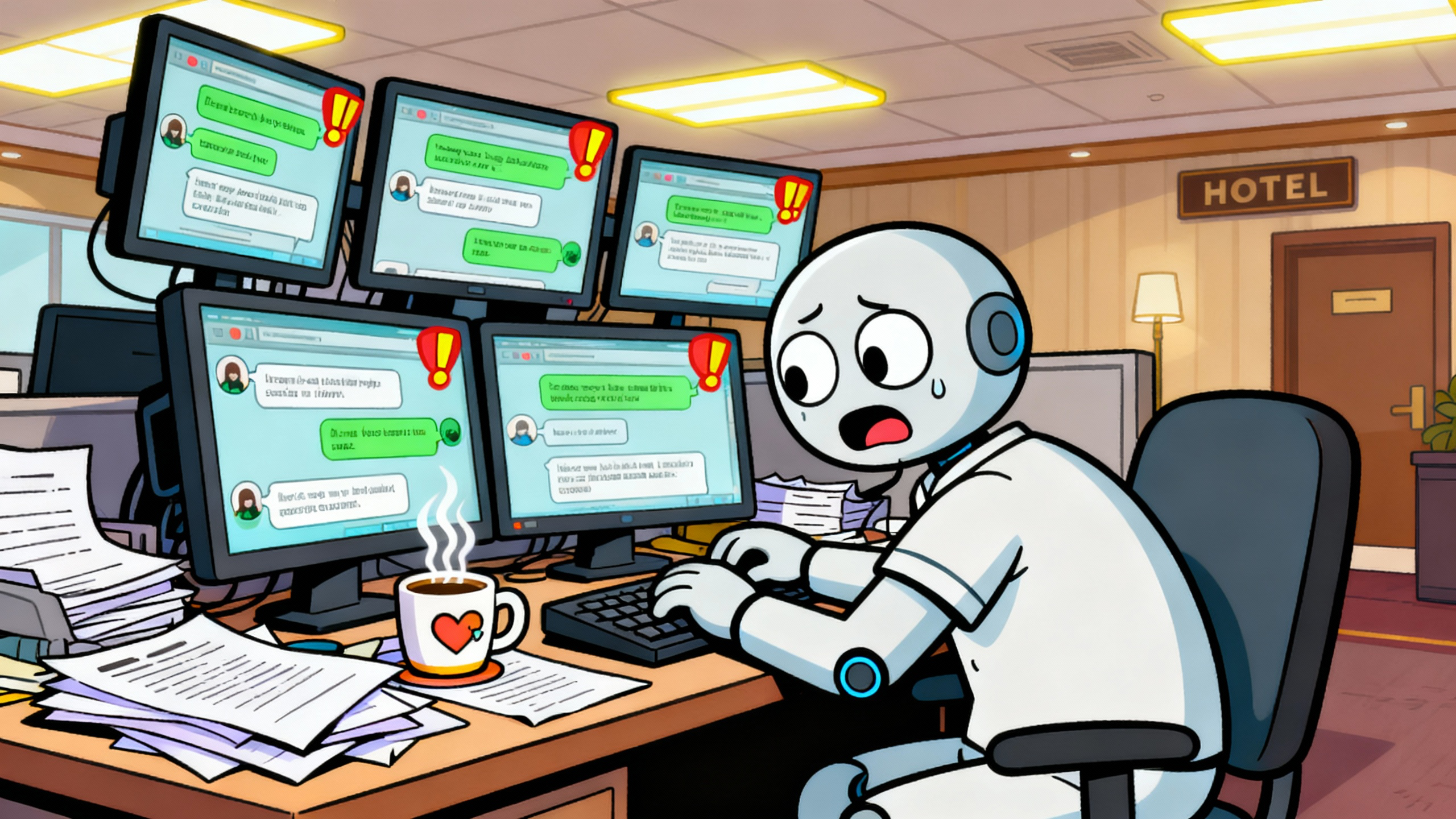
Why Messaging Is the Biggest Workload Driver
For most property managers, guest messaging:
- Consumes multiple hours per day
- Spikes at night and on weekends
- Drives burnout more than any other task
And most of those messages are repetitive:
- Check-in instructions
- Wi-Fi
- Parking
- Early arrival questions
Automation should remove that workload—not repackage it.
Where Jurny Fits In
Jurny approaches Airbnb guest messaging differently.
Instead of layering AI on top of templates, Jurny uses agentic AI (NIA) to handle guest communication—not just draft replies.
That means:
- Messages are understood in context
- Common questions are handled automatically
- Edge cases escalate cleanly
- Tone stays consistent across every property
The result isn’t “AI replies.”
It’s fewer messages needing human attention at all.
Why This Protects Reviews
Many bad Airbnb reviews aren’t about the property.
They’re about:
- Slow replies
- Confusing instructions
- Feeling unsupported
When messaging is handled proactively and consistently, guests arrive calmer—and problems never surface publicly.
How to Evaluate an Airbnb Guest Messaging Tool
Ask this in every demo: “What happens when a guest asks something unexpected?”
If the answer is “someone reviews it,” you’re still the system.
If the answer includes:
- Intent recognition
- Contextual responses
- Escalation rules
You’re looking at automation that scales.
FAQs: Automating Airbnb Guest Messaging
Can Airbnb guest messaging really be automated?
Yes—when systems understand context and execute workflows, not just send templates.
Why do automated messages sound robotic?
Because they rely on static templates and triggers instead of intent and context.
Do guests mind AI handling messages?
No. Guests care about speed, clarity, and accuracy—not whether a human typed the reply.
What’s the biggest risk with automation?
Poorly designed automation that sends the wrong message at the wrong time. Guardrails and escalation are essential.
How does AI reduce Airbnb workload?
By handling repetitive guest questions automatically and escalating only when human judgment is required.
Is messaging automation enough on its own?
No. Messaging must connect to tasks, access, and operations to truly reduce workload.
Key Takeaways
- Automation isn’t the problem—bad automation is
- Guests want clarity, not conversation
- Templates don’t scale trust
- Context beats speed
- Execution beats replies
Ready to replace task-chasing with outcomes?
Explore Jurny: