
Why World Cup 2026 will stress-test rental software
World Cup 2026 will create one of the largest short-term rental demand surges in history.
For property managers, this means:
- A sharp increase in international bookings
- Longer booking windows combined with last-minute changes
- Continuous guest messaging across time zones
- Heightened scrutiny from owners and partners
Most rental software performs adequately during steady growth.
World Cup demand is different.
It compresses volume, urgency, and complexity into a short window—revealing whether your systems can execute under pressure, not just store information.
The real risk isn’t occupancy. It’s execution failure.
High demand rarely breaks businesses because calendars are full.
It breaks them because:
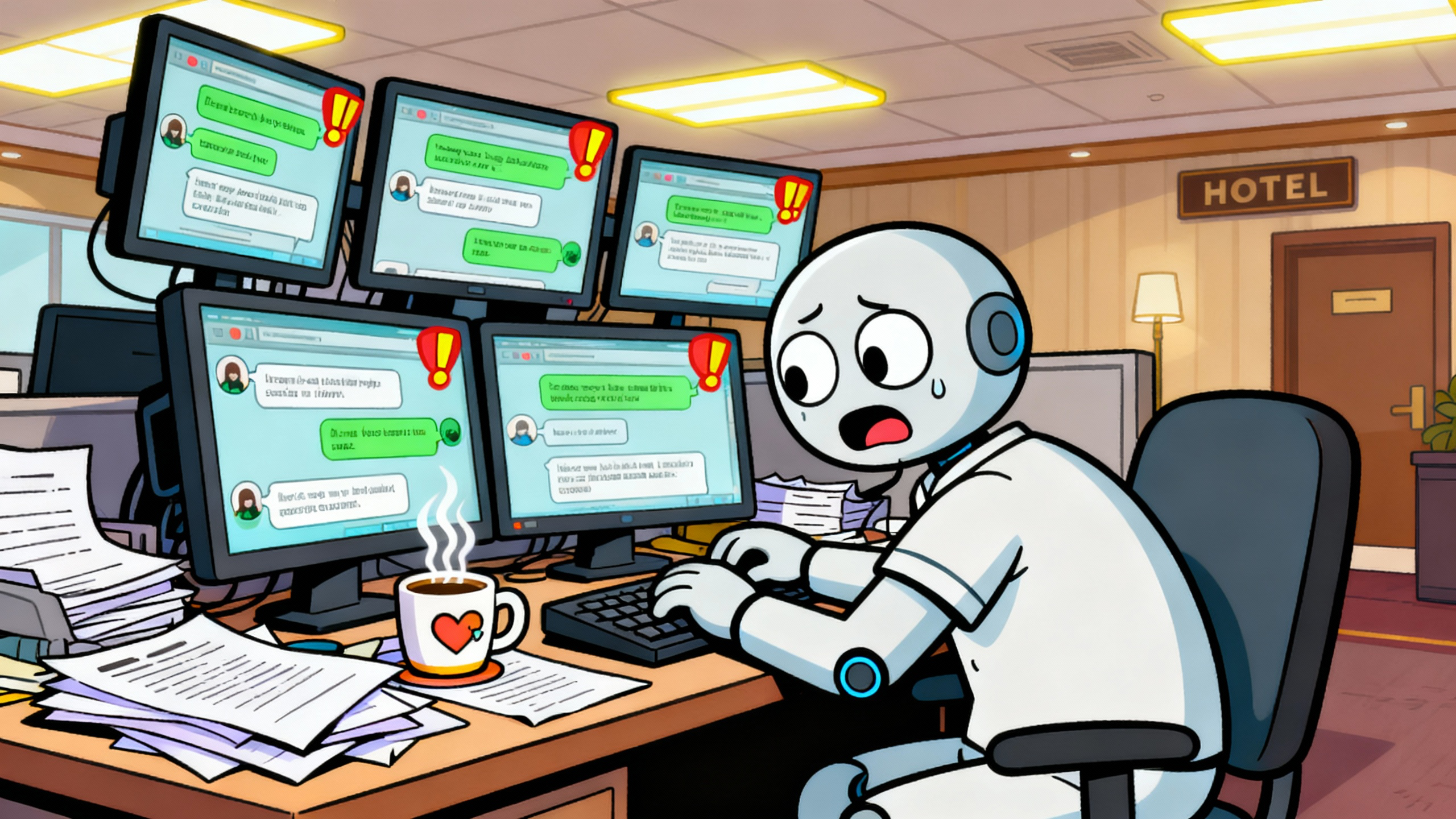
- Messages pile up faster than teams can respond
- Reservation changes require manual coordination
- Housekeeping schedules tighten with no margin for error
- Reviews reflect response delays, not property quality
This creates what many property managers experience as operational drag—the invisible slowdown caused by fragmented tools and manual handoffs.
The more demand increases, the more these small inefficiencies compound.
Why traditional rental software struggles during global events
Most short-term rental software was built to:
- Display reservations
- Sync calendars
- Centralize data
Very little was built to execute actions autonomously.
During peak events like the World Cup:
- Dashboards don’t reduce workload
- Notifications don’t solve bottlenecks
- Tasks still depend on humans remembering, routing, and following up
Adding staff or more tools during peak demand often increases complexity rather than reducing it.
What fails isn’t effort. It’s coordination.
What World Cup-ready rentals software must do
For World Cup 2026, rental software needs to function less like a control panel and more like an operating system.
Specifically, it must:
Execute actions, not just surface alerts
Calendar changes, task assignments, and guest responses should happen automatically.
Handle guest communication at scale
Fast, consistent replies across Airbnb, Booking.com, SMS, WhatsApp, and email—24/7.
Coordinate reservations, calendars, and turnovers in real time
So changes in one system don’t create delays in another.
Protect reputation while increasing revenue
Resolving issues quickly while capturing upsell opportunities during peak demand.
This is where modern AI-powered property management software separates from legacy systems.
Why agentic AI changes the equation
Agentic AI introduces a different operating model.
Instead of relying on one system and many humans, agentic platforms deploy multiple specialized AI agents, each responsible for a specific operational domain:
- Guest messaging
- Reservation management
- Housekeeping and maintenance coordination
- Review monitoring and responses
- Upsells and ancillary revenue
These agents work simultaneously and continuously, coordinated by a central intelligence layer.
At Jurny, that layer is NIA Co-Pilot—a conversational command center that can execute tasks in real time rather than just reporting on them.
In high-demand environments, this results in:
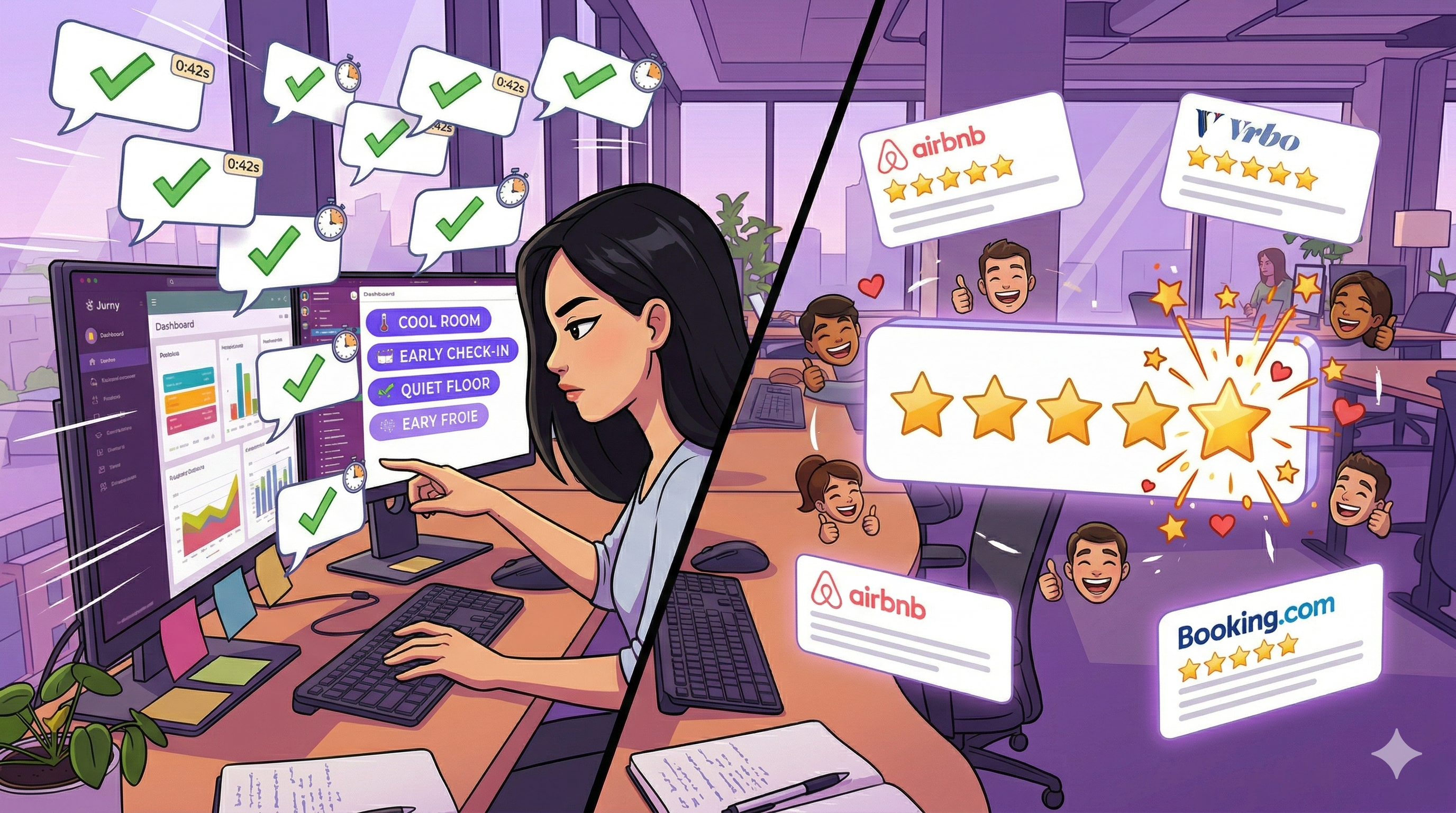
- Significantly faster response times
- Dramatically reduced manual workload
- More consistent guest experiences
- Higher revenue per stay during peak periods
The system absorbs pressure instead of passing it to your team.
What property managers should have in place before demand spikes
Preparing for World Cup 2026 isn’t about predicting demand—it’s about removing fragile steps.
Property managers who handle peak events smoothly typically have:
Unified AI guest messaging
One inbox across all channels, with AI handling most inquiries automatically.
Self-executing reservations
Date changes, extensions, and blocks managed without manual intervention.
Automated housekeeping coordination
Tasks triggered, tracked, and escalated without relying on follow-up messages.
Proactive review management
Issues identified and addressed before they impact public ratings.
Context-aware upsells
Early check-in, late checkout, and experiences offered automatically when inventory allows.
These capabilities reduce operational risk before volume arrives.
The future of peak demand without burnout
World Cup 2026 doesn’t have to mean longer hours or reactive firefighting.
With the right rental software:
- Guest messages are handled instantly
- Reservation changes don’t cascade into problems
- Turnovers stay on schedule
- Revenue increases without adding headcount
This is the difference between software that helps you manage work and software that actually does the work.
Jurny was built as an AI operating system for hospitality—designed for moments when demand is at its highest and execution matters most.
Key Takeaways
- World Cup 2026 will expose execution gaps in rental software
- Fragmented tools increase risk during global demand spikes
- Property managers need systems that execute, not just inform
- Agentic AI enables scale without additional staffing
- Preparing early protects reviews, revenue, and teams
FAQs
What rental software is best for World Cup 2026 demand?
Rental software that uses AI to automate guest messaging, reservations, housekeeping coordination, and reviews performs best during extreme demand.
Why do peak events strain traditional property management systems?
Because they rely on manual coordination across disconnected tools and human follow-up.
Can AI really handle high guest message volume?
Yes. AI guest agents can resolve most routine inquiries instantly and escalate only complex or sensitive cases.
Should property managers plan to hire more staff for World Cup 2026?
Not necessarily. Many property managers scale more effectively by upgrading execution systems rather than increasing headcount.
When should preparation for World Cup demand begin?
Well before booking volume peaks, so automation and workflows are tested before pressure hits.
If World Cup 2026 is likely to bring more bookings, more messages, and more complexity than any season before, the safest move is ensuring your software can absorb that pressure—not pass it on to your team.
Jurny was designed for high-demand hospitality moments, when consistency and response time define the guest experience.
Ready to replace task-chasing with outcomes? Book a Demo.
Explore Jurny: