
TLDR — Guest Experience in 2026
In 2026, most guest experience failures don’t happen during the stay. They happen between booking and check-in—when expectations are set, questions pile up, and systems fail to execute consistently. Slow responses, unclear instructions, and manual handoffs are now the biggest drivers of guest frustration and bad reviews.
Last updated: January 2026
Top 2026 Guest Experience Misses That Happen Between Booking and Check-In
Guests don’t judge your stay when they walk through the door.
They judge it before they arrive.
Modern guests expect hotel-level clarity, speed, and confidence from the moment they book. For property managers, this is where the experience most often breaks—not because teams don’t care, but because systems don’t run the work end to end.
Below are the most common guest experience misses happening between booking and check-in in 2026.
1. Silence After Booking (Even Brief Silence)
After booking, guests expect immediate reassurance:
- Confirmation that the reservation is locked
- Clear next steps
- A sense that someone is actively managing their stay
When nothing happens—even for a few hours—anxiety starts.
Why it breaks experience:
Silence signals disorganization. Guests don’t complain yet, but trust drops immediately.
2. Generic Confirmation Messages That Answer Nothing
Messages like: “Thanks for booking! We’ll send details soon.”
Don’t answer what guests actually need to know:
- When will I hear from you again?
- What should I prepare?
- Who do I contact if I have questions?
Why it breaks experience:
Unclear messaging increases follow-ups, stress, and message volume on both sides.
3. Conflicting Information Across Channels
The inbox says one thing.
The guidebook says another.
The automated message says something else.
Why it breaks experience:
Even small inconsistencies make guests doubt the entire operation.
Why it happens:
Disconnected tools, outdated templates, and manual edits across systems.
4. Last-Minute Check-In Instructions
Sending access details right before arrival may feel efficient internally, but it creates stress for guests trying to plan travel, timing, and logistics.
Why it breaks experience:
Late instructions cause anxiety and spike inbound messages at the worst possible time.
5. Missed or Delayed Edge-Case Questions
Early check-in requests.
Parking clarifications.
Accessibility questions.
These are no longer edge cases—they’re routine.
Why it breaks experience:
When these go unanswered, guests feel ignored—even if everything else is perfect.
6. No Sense of Reassurance or Progress
Great guest experience isn’t just about information. It’s about confidence.
Guests want to feel:
- Expected
- Prepared for
- Taken care of
When communication is purely reactive, guests assume something might go wrong.
7. Manual Handoffs That Drop the Ball
Between booking and arrival, multiple steps must happen:
- Ops coordination
- Cleaning alignment
- Access setup
- Guest instructions
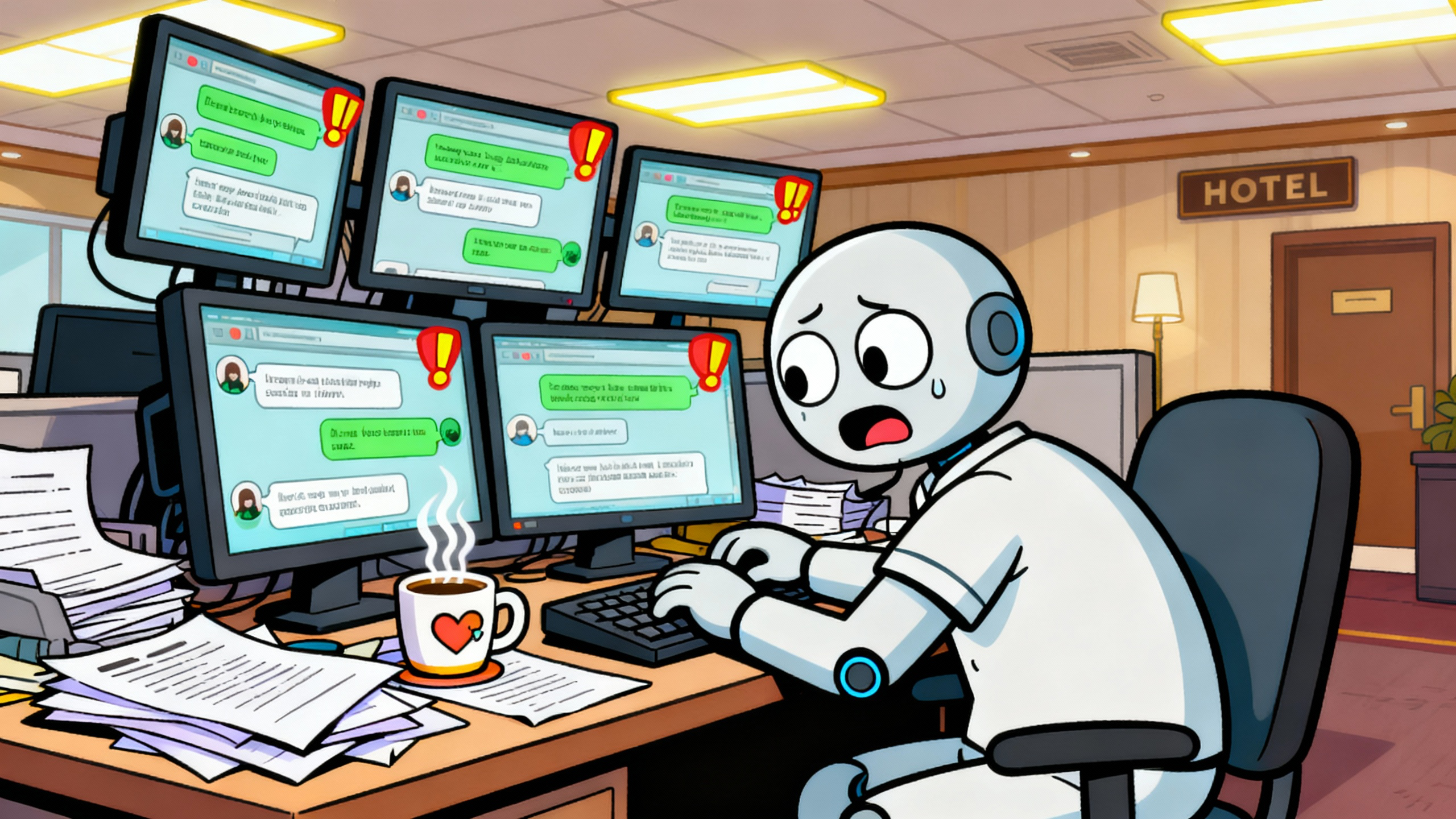
When humans manage each step manually, things slip.
Why it breaks experience:
Guests don’t see the workflow—but they feel the delay.
Why These Misses Matter More in 2026
Guests today:
- Expect hotel-level coordination
- Have little tolerance for uncertainty
- Judge stays by how effortless everything feels
And most importantly:
Guests don’t think “great software.”
They think “great stay.”
By the time a guest arrives frustrated, the experience gap is already locked in.
How Property Managers Prevent These Misses at Scale
The teams delivering consistent 5-star experiences in 2026 aren’t relying on:
- More templates
- Faster typing
- Bigger teams
They rely on systems that execute automatically.
That means:
- Immediate, contextual responses after booking
- Proactive answers before guests ask
- One source of truth across all channels
- Escalation only when human judgment is required
This is where agentic AI platforms like Jurny come in.
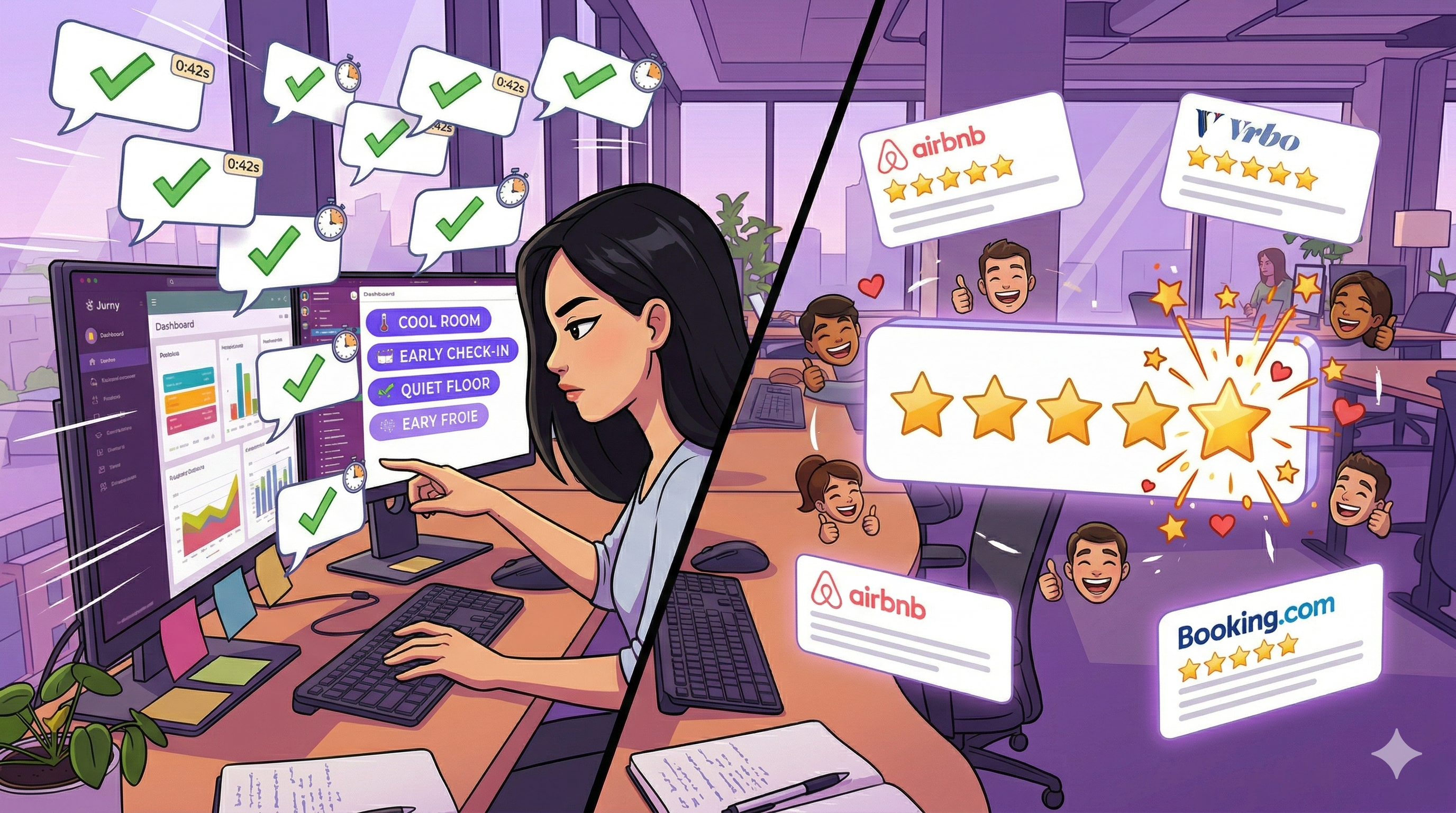
Jurny isn’t another inbox or automation layer. It’s an agentic operating system that runs guest communication, coordination, and follow-ups between booking and check-in—so nothing falls through the cracks.
FAQs: Guest Experience Between Booking and Check-In
What causes guest experience issues before check-in?
Most issues are caused by slow responses, unclear instructions, inconsistent information, and manual handoffs between systems.
Why do guests leave bad reviews even when the property is great?
Because frustration often builds before arrival. Delayed replies and uncertainty shape guest perception long before they see the property.
How important is response time between booking and arrival?
Critical. Faster responses increase guest confidence, reduce inbound messages, and protect review scores.
Can automation really improve guest experience?
Yes—when automation executes workflows end to end. Templates alone don’t reduce workload or prevent issues.
What’s the biggest guest experience risk for scaling property managers?
Manual processes that don’t scale with volume, leading to missed messages, inconsistencies, and burnout.
How does agentic AI help prevent these issues?
Agentic AI handles communication, coordination, and follow-ups automatically, escalating only when needed—reducing errors and response delays.
Do guests notice automation?
Guests don’t notice automation—they notice clarity, speed, and confidence. When done right, it feels like great service.
Key Takeaways
- Most guest experience failures happen before arrival
- Silence and uncertainty matter more than amenities
- Manual workflows break at scale
- Consistent execution beats reactive service
- Agentic systems prevent problems instead of fixing them later
Ready to replace task-chasing with outcomes?
Explore Jurny: