
TLDR — Scaling Past 50 Units
In 2026, crossing 50 units isn’t a growth milestone—it’s an operational stress test. Message volume spikes, handoffs break, and systems designed for smaller portfolios stop executing reliably. Most teams don’t fail because of effort. They fail because their systems can’t scale.
Last updated: February 2026
Crossing 50 Units in 2026: The Operational Cracks No One Warns You About
Most property managers remember the moment things changed.
Not when they added a new owner.
Not when they hired another cleaner.
But when everything started feeling harder—even though nothing was technically “wrong.”
That moment usually happens around 50 units.
Why 50 Units Is a Breaking Point (Not a Milestone)
Up to 20–30 units, effort compensates for weak systems.
Between 30–50, good people and hustle still hold things together.
After 50, volume exposes everything.
Not because teams stop caring—but because complexity compounds faster than humans can manage it manually.
Crack #1: Guest Messaging Stops Being Manageable
At 50 units, message volume doesn’t double—it multiplies.
You’re no longer dealing with:
- One channel
- One inbox
- One “busy period”
You’re dealing with simultaneous conversations across Airbnb, Booking.com, SMS, WhatsApp, and email—often outside business hours.
What it feels like:
You’re always behind, even when you’re replying fast.
What’s actually happening:
Your systems aren’t handling conversations end to end. Humans are.
Crack #2: “Edge Cases” Become the Norm
Early check-in requests.
Late arrivals.
Parking exceptions.
Special instructions.
At small scale, these feel manageable.
At 50 units, they’re constant.
The problem:
Most automation handles the happy path—not the messy reality.
When edge cases pile up, staff becomes the safety net. That’s when burnout starts.
Crack #3: Inconsistent Guest Experience Across Properties
One guest gets clear instructions.
Another gets a vague message.
Another gets outdated info.
Why this happens:
- Multiple templates
- Manual edits
- Disconnected tools
Guests don’t see your stack—they feel the inconsistency.
And inconsistency is what shows up in reviews.
Crack #4: Manual Handoffs Start Failing
Between booking and check-in, dozens of things must happen:
- Cleaning coordination
- Access setup
- Guest instructions
- Upsells and follow-ups
When each step depends on a human remembering the next step, errors are inevitable.
At 50 units, memory-based operations stop working.
Crack #5: Owners Start Asking Harder Questions
More units usually means more owners.
And owners want:
- Clear reporting
- Faster answers
- Fewer surprises
When systems are fragmented, owner communication becomes another manual workload layer—often handled reactively.
Crack #6: The Team Feels “Always On”
Even with software.
Even with automation.
Even with good people.
That’s the signal.
When teams feel permanently on call, it’s not a staffing issue—it’s an execution issue.
Why This Happens More Often in 2026
Modern guests expect:
- Instant clarity
- Hotel-level coordination
- Proactive communication
But most property management software was designed to organize work, not run it.
At 50 units, organization isn’t enough.
Execution matters.
How High-Performing Teams Avoid These Cracks
The teams that scale past 50 units without chaos don’t rely on:
- More templates
- More rules
- More staff
They rely on systems that execute outcomes automatically.
That means:
- Guest questions handled without human review
- Tasks triggered by context, not memory
- One source of truth across channels
- Escalation only when judgment is needed
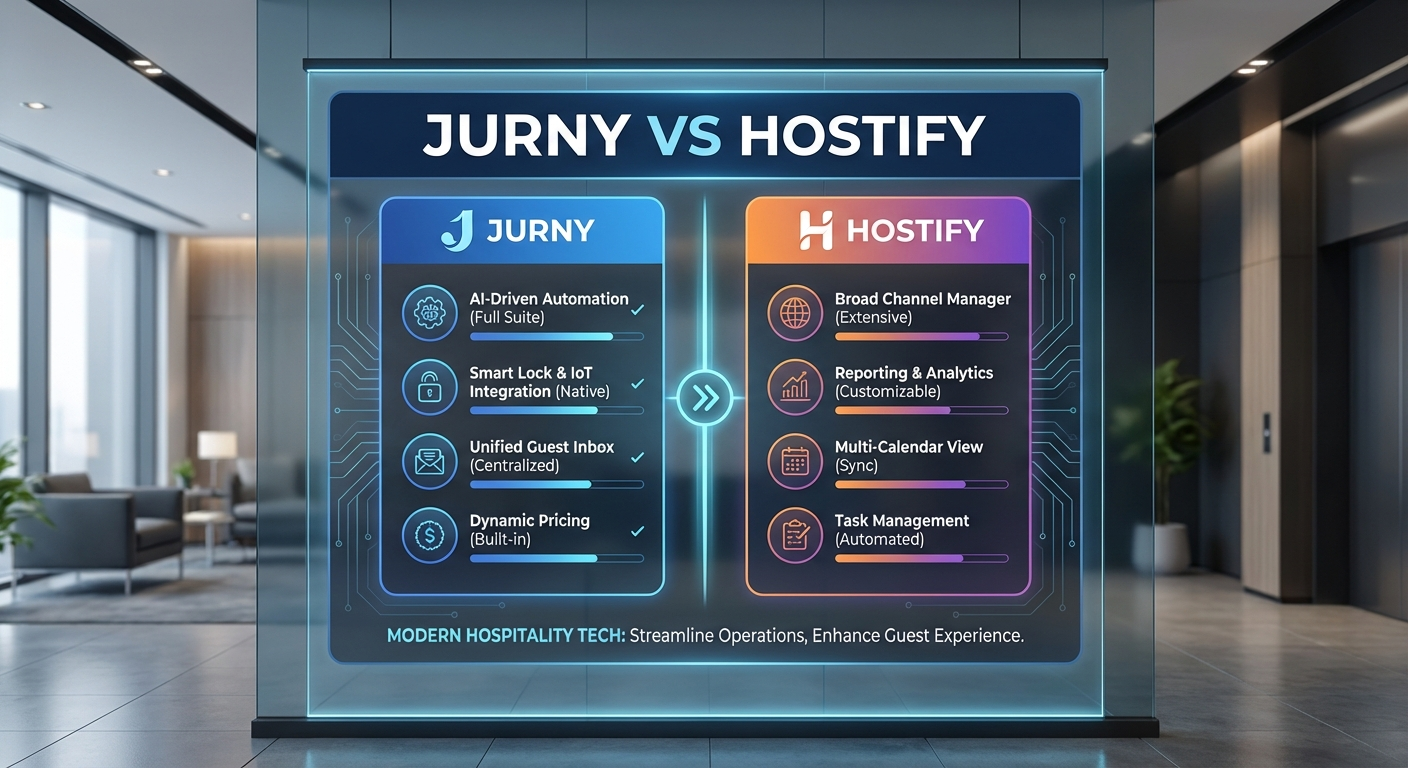
This is where agentic AI platforms like Jurny come in.
Jurny isn’t another tool layered on top of manual processes.
It’s an agentic operating system that runs messaging, tasks, follow-ups, and coordination across the guest journey—so scale doesn’t create fragility.
FAQs: Scaling Past 50 Units
Why does property management get harder after 50 units?
Because volume exposes system limitations. Manual workflows and basic automation don’t scale reliably beyond this point.
Is 50 units a common breaking point?
Yes. Many teams report operational stress increasing sharply between 40–60 units due to message volume, handoffs, and complexity.
What’s the biggest operational risk at this stage?
Guest messaging chaos—slow responses, missed edge cases, and inconsistent information.
Can automation fix these problems?
Only if automation executes workflows end to end. Templates alone don’t reduce workload.
How does agentic AI help at this scale?
Agentic AI handles communication and coordination automatically, escalating only when needed—reducing errors and burnout.
Should teams add staff at 50 units?
Adding staff without fixing systems often increases complexity. Execution-driven systems should come first.
Key Takeaways
- 50 units is an execution test, not a growth milestone
- Message volume is the first thing to break
- Manual handoffs don’t scale
- Inconsistency shows up before complaints
- Systems—not people—determine whether growth feels calm or chaotic
Ready to replace task-chasing with outcomes?
Explore Jurny: