There is a version of STR automation that makes operations more efficient, guests happier, and businesses more profitable. There is another version that makes guests feel like they are interacting with a call center — impersonal, scripted, and indifferent to their specific situation.
The difference between these two outcomes is not how much you automate. It is what you automate and how you build the automation.
This matters because the risk of over-automation is real, and operators who pursue automation without thinking carefully about the guest experience dimension can find themselves with efficient operations and declining review scores — a combination that is both baffling and damaging.
What Guests Actually Experience With Automation
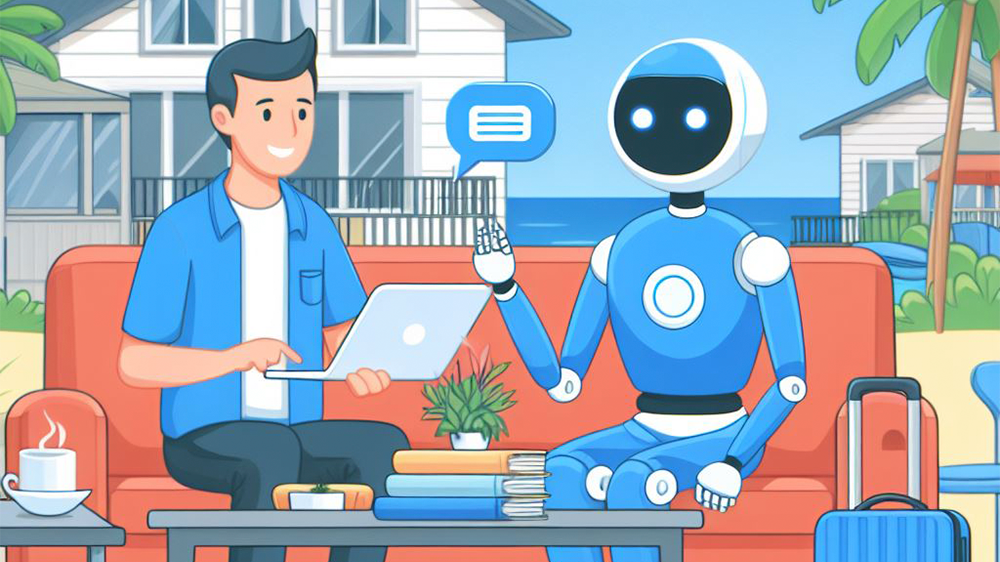
Guests do not experience automation. They experience the results of automation. When automation works well, guests experience fast, accurate, helpful responses that feel attentive. They do not know or care that the response was generated by AI — what they know is that their question was answered in thirty seconds at midnight, and the answer was correct.
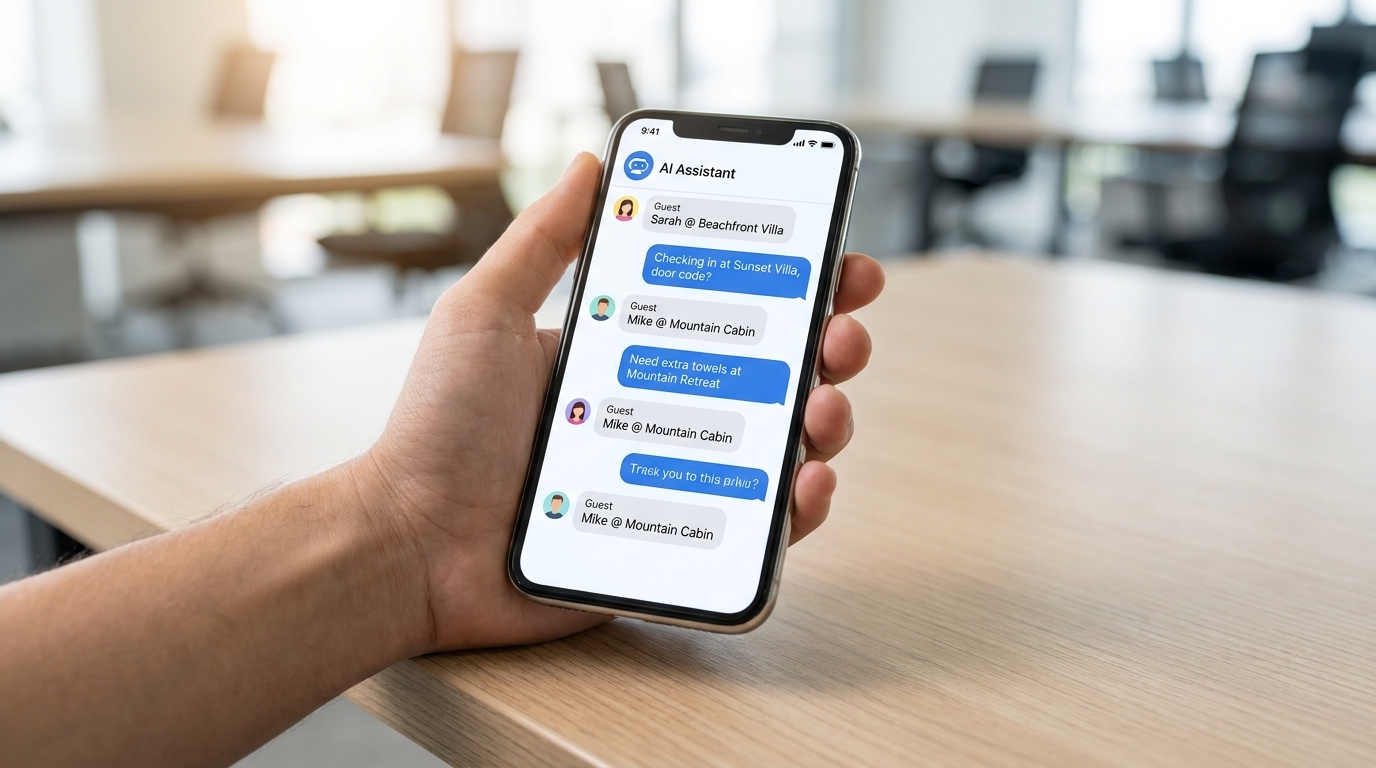
When automation fails, guests experience the failure mode of whatever was automated. A scheduled message that arrives at the wrong time. An AI response that confidently gives wrong information about the access code. A generic check-in sequence that references the wrong property name. These failures signal to guests that no one is actually paying attention — and that signal shows up in reviews.
The automation that fails most visibly is automation that was built without adequate data context, automation that runs on a schedule without checking whether the conditions have changed, and automation that applies generic templates to situations that require specific responses.
The Automation That Makes Guests Feel Known
Guests who feel genuinely known — who feel like the property operator is aware of who they are and why they are there — consistently leave better reviews and return more often. The operational challenge is that at thirty properties with hundreds of guests per month, feeling known is not achievable through human attention. It has to be manufactured through data.
The automation that creates this feeling has access to guest context: their booking history, their reason for staying, their communication preferences, any notes from previous stays. It uses this context to personalize every touchpoint — not just the welcome message, but the upsell offers, the check-in instructions, the mid-stay check-in, the review request. The guest who is celebrating an anniversary receives different communications than the guest on a work trip. Not because a human customized them, but because the system knows who each guest is.
This is the version of automation that improves guest satisfaction scores rather than degrading them.
The Functions That Should Not Be Fully Automated
Not everything should be automated to the point of removing human involvement entirely. The situations that benefit from human judgment include:
-
Complex complaints where a guest is clearly distressed and the human empathy dimension matters. A guest who has had a genuinely difficult experience — a maintenance failure that affected their stay, a situation that was not handled well initially — typically responds better to a human response that demonstrates genuine care than to a well-crafted AI response. The AI can draft the response and alert the human team; the human should send it.
-
High-value returning guests who have a relationship with the property. The guest who has stayed with you six times deserves a personal touchpoint — not necessarily for every interaction, but at key moments like their anniversary as a guest or during a milestone stay.
-
Unusual situations that fall outside defined parameters. The AI should handle the predictable scenarios and escalate the genuinely novel ones. The threshold for escalation should be calibrated based on operational experience — too high and you miss situations that need human judgment, too low and you are back to manual management.
The Right Way to Think About Automation
Automation at its best is not the replacement of human hospitality. It is the scaling of human hospitality — the ability to deliver attentiveness, accuracy, and personalization at a volume that human attention cannot sustain.
The operators getting this right are not those who have automated the most. They are the ones who have automated the right things — with the right data, the right context, and the right escalation paths — and kept humans in the loop for the decisions that actually require human judgment.
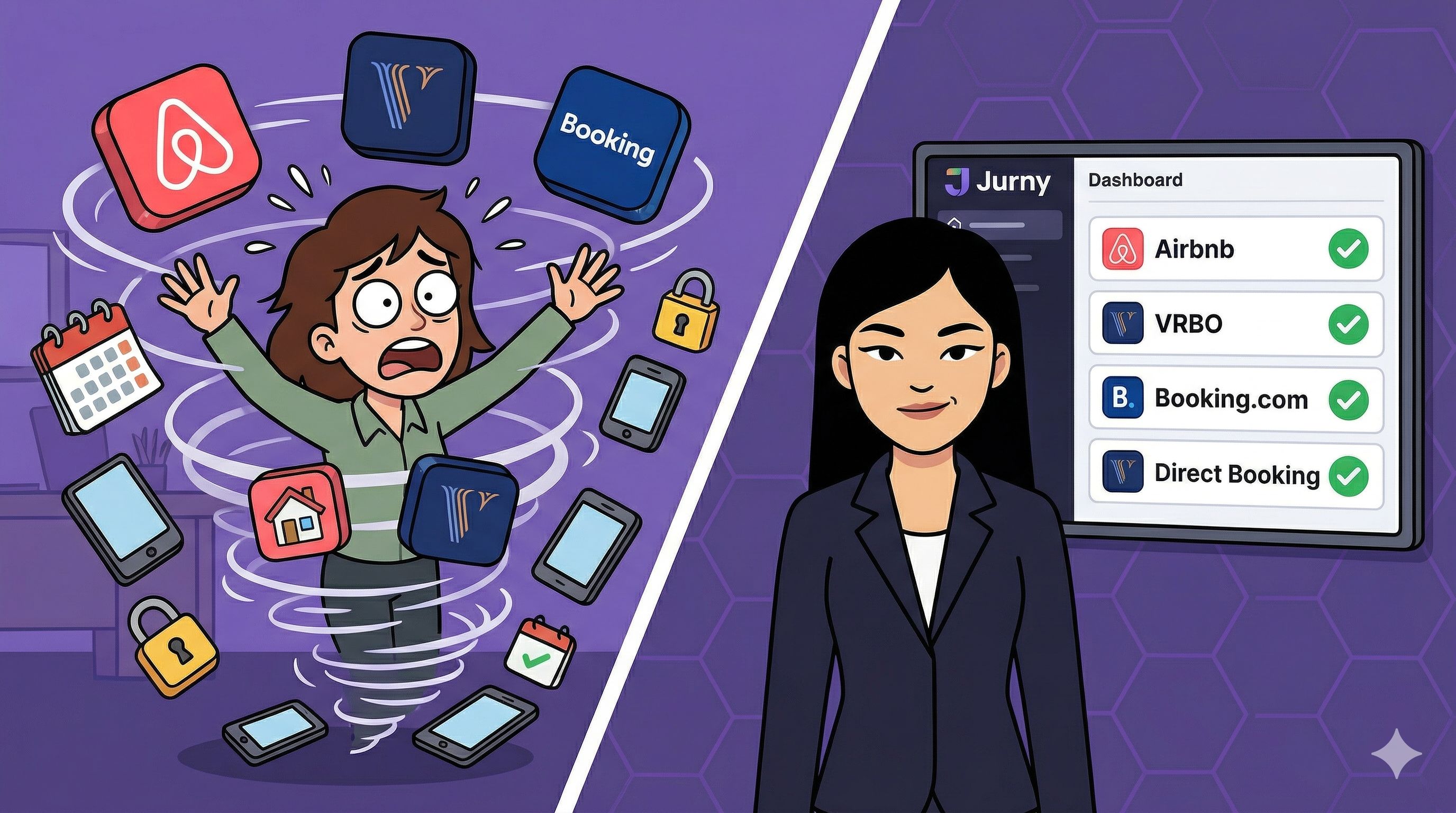
Inside Jurny, NIA is designed around this principle. It handles the volume. It escalates the exceptions. It operates from complete guest context so that the automated interactions feel personal rather than scripted. Book a demo to see what thoughtful automation looks like for a portfolio your size.
Explore Jurny: