
It's 2 AM on a Friday, and your inbox is flooded. Three new booking inquiries. Two guest messages asking about check-in procedures. A maintenance issue reported in one property. A cleaning coordinator who needs confirmation for tomorrow's turnover. And somewhere in that chaos, you have two hours of work left before you can think about pricing optimization or responding to those new reviews across four different platforms.
You're not alone. Property managers across the industry are drowning in operational noise—not because the work is complex, but because it's relentless and repetitive. The question keeping many awake at night isn't "Should I automate?" but rather: "What actually CAN be automated right now in 2026, and what still needs a human touch?"
TL;DR
In 2026, AI can autonomously handle 80-90% of guest communication, pricing optimization, review management, cleaning coordination, and guest experience personalization. What requires human judgment: property disputes, maintenance decisions requiring expertise, complex guest complaints, and strategic business planning. The real game-changer isn't what gets automated—it's which tasks stay human and whether your systems are aligned to amplify human decision-making rather than replace it.
The Current State: What Automation Has Actually Achieved
The short-term rental industry hit an inflection point in 2024-2025. What was once aspirational—"AI will handle your listings someday"—became operational reality for early adopters. But there's often a disconnect between what can be automated and what should be.
According to a 2026 industry report, 84% of active property management professionals now use AI tools in their workflows. That's not adoption; that's market normalization. Yet average management time per listing hovers around 12.5 hours per week for property managers still operating traditionally. The reason? They're automating pieces of the puzzle rather than automating the entire operation.
Here's what the data shows about the current landscape:
- Guest communication: AI systems now handle 80-90% of incoming messages autonomously, with human review required only for edge cases or escalations
- Pricing optimization: AI-powered pricing strategies deliver 15-30% more revenue compared to manual pricing across similar properties
- Review management: Automated review response across all OTAs (Airbnb, Vrbo, Booking.com, etc.) now covers 100% of reviews with personalized responses
- Operational coordination: Cleaning, maintenance routing, and guest communication can be fully coordinated without human intervention in 70%+ of scenarios
The gap, however, lies not in capability but in intentionality. What automation has actually achieved depends entirely on how it's deployed.
The Granular Truth: What Gets Automated, What Doesn't, What Shouldn't
Communication & Guest Experience
What CAN be automated:
- Initial booking confirmations and payment collection
- Check-in/check-out procedures and digital guidebook delivery
- FAQ responses (house rules, WiFi passwords, parking, pet policies, amenities)
- Upsell offers (early check-in, late checkout, local experiences, amenity add-ons)
- Review requests after guest departure
- Standard complaint acknowledgment and resolution routing
What SHOULD remain human:
- Complex guest conflicts or disputes
- Situations requiring property-specific judgment calls
- Complaints about other guests or serious issues
- Cancellation requests that might signal larger problems
A modern AI communication agent can field 80+ distinct message types and respond contextually. It learns your property specifics (neighborhood info, house quirks, local recommendations). It knows when to escalate to a human and does so immediately. The difference between old chatbots and today's agents? Today's systems understand intent, not just keywords.
Pricing & Revenue Management
What CAN be automated:
- Dynamic pricing based on demand, seasonality, local events, and competitor rates
- Occupancy forecasting and revenue optimization
- Price testing and A/B optimization across seasons
- Upsell pricing for add-on services (30%+ additional revenue per booking possible)
- Competitive rate monitoring across 90+ OTAs
What SHOULD remain human:
- Long-term portfolio strategy and positioning decisions
- Market entry/exit decisions for new properties
- High-level seasonal strategy adjustments
- Response to major market shifts
Pricing automation has reached sophistication where AI can lift revenue 15-30% above manual pricing—not through gouging, but through precision. The AI understands micro-seasonality: it knows that the third weekend in September performs differently than the fourth. It knows what amenity combinations command premium pricing. It knows when to undercut to maintain occupancy and when to hold firm. What it doesn't do well is understand your long-term business vision. That remains yours.
Operations & Logistics
What CAN be fully automated:
- Cleaning task creation, assignment, and quality verification
- Maintenance request routing to appropriate contractors
- Turnover coordination (confirming dates, assigning teams, flagging conflicts)
- Inventory management and restocking alerts
- Utility monitoring and anomaly detection
- Guest check-in/check-out coordination and digital lock integration
What requires oversight:
- Strategic maintenance planning (when to renovate vs. repair)
- Vendor relationship management and escalation
- Major property issues requiring expert diagnosis
- Decisions about outsourcing vs. in-house operations
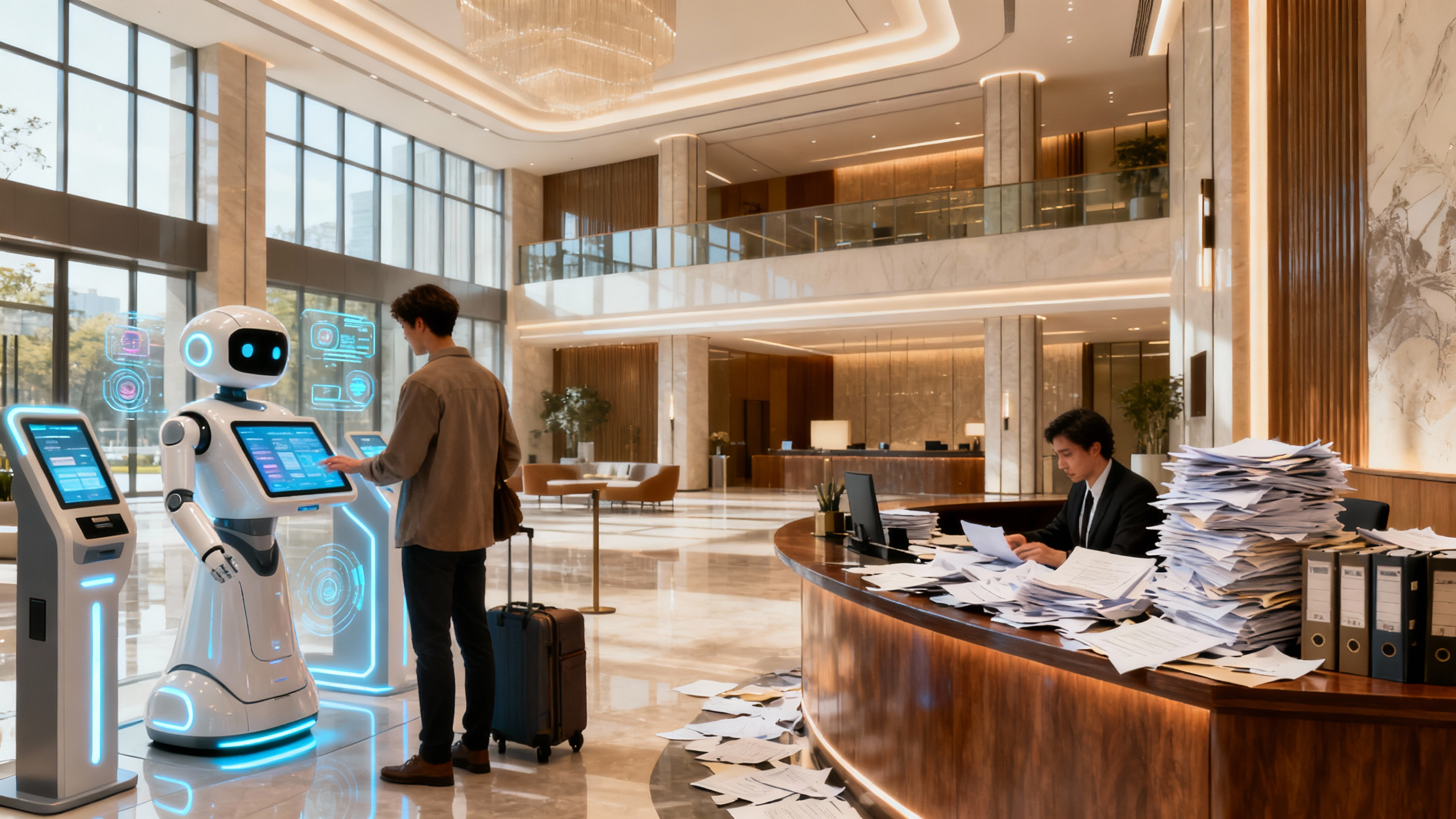
The operational lift is measurable: the difference between 12.5 hours of manual management per week per listing and under 1 hour per week. That's not achieved through micro-automations; it's achieved through end-to-end operational orchestration where every touchpoint—from guest arrival to departure to feedback collection—is systematized.
Review Management
What CAN be fully automated:
- Monitoring all review platforms (Airbnb, Vrbo, Booking.com, Google, etc.)
- Crafting personalized responses to positive and negative reviews
- Flagging reviews that need human escalation
- Tracking review trends and sentiment analysis
- Building reputation strategy recommendations
What needs human input:
- Responding to reviews that involve serious complaints or disputes
- Decisions about when to offer compensation or rebooking
- Strategic reputation positioning during crisis
The 2026 capability here is comprehensive: AI doesn't just send template responses anymore. It reads context, understands guest sentiment, tailors responses to individual properties, and learns from past interactions. It responds to every review—across all platforms—autonomously, which most property managers simply cannot do manually.
Guest Experience Personalization
What CAN be automated:
- Digital guidebooks tailored to guest preferences and booking dates
- Personalized local recommendations based on guest profile
- Concierge suggestions (restaurants, activities, transportation)
- Welcome messaging and check-in communication
- Guest feedback collection and sentiment tracking
What stays human:
- Truly personalized local recommendations requiring nuanced local knowledge
- Responses to unique or unusual guest requests
- Building guest relationships for repeat bookings
Personalization at scale is where AI excels. It can create a unique guidebook for every guest without human effort, synthesizing hundreds of data points—guest nationality, age, travel party size, interests, weather conditions, local events—into genuinely helpful recommendations.
What Still Requires Human Judgment
Let's be clear about where automation has limits—not because the technology isn't capable, but because certain decisions carry risk or require wisdom that AI hasn't yet replicated:
1. Property disputes: When guests claim damages or hosts suspect damages, investigation and judgment are needed
2. Maintenance expertise decisions: Whether a plumbing issue can wait or requires emergency intervention
3. Complex complaint resolution: When a guest is genuinely upset about an experience, sometimes only human empathy resolves it
4. Strategic portfolio decisions: Which properties to acquire, which to exit, how to position your portfolio
5. High-value or unusual requests: When a guest offers to pay significantly more for changes, strategic thinking applies
6. Legal or compliance issues: Anything touching fair housing, accessibility, or regulatory compliance
These aren't gaps in AI capability. They're intentional boundaries. A well-designed automation system knows when to escalate and does so intelligently, routing issues to the right person with full context pre-loaded.
The Real Shift in 2026: Autonomous vs. Augmented Modes
This is crucial: automation doesn't have one setting. The most advanced systems now operate in two modes:
Fully Autonomous Mode: AI handles the entire operation—communication, pricing, operations, reviews, guest experience—with human review only for flagged escalations. ~30% of active users of modern AI-native PMS platforms operate in this mode.
Augmented Mode: AI handles routine tasks and generates recommendations; humans make final decisions. This is the default for most operators and offers the best balance of control and time savings.
The future isn't about removing humans from property management. It's about removing humans from repetitive property management, freeing them to focus on strategy, guest relationships, and high-value decisions.
The Bottom Line: 2026 Automation Reality
In 2026, you can automate:
- 80-90% of guest communication
- 100% of routine operational coordination
- 100% of review management
- Pricing optimization at a level humans can't compete with
- Guest experience personalization at scale
What you can't (and shouldn't) automate:
- Strategic business decisions
- Complex problem-solving requiring expertise
- Relationship-building with high-value guests
- Legal or compliance decisions
The question isn't "What can AI automate?" The question is: "What's the highest and best use of my time as a property manager, and what can AI handle so I can focus there?"
For most operators, that realization cuts management time from 12.5 hours per week to under 1 hour—not because everything is automated, but because the right things are automated.
FAQ
Q1: If AI handles 80% of guest communication, do I still need to monitor that messaging?
A: In fully autonomous mode, you don't need to monitor routine messages, but you should have alerts set up for escalations and special requests. Most managers check escalations 1-2x daily, not continuously. The AI flags anything that needs judgment, and you review those proactively.
Q2: Can AI pricing really increase revenue by 15-30%?
A: Yes, but context matters. That uplift assumes your pricing was previously manual or rule-based. AI doesn't raise prices arbitrarily; it optimizes based on micro-seasonality, demand curves, competitor positioning, and historical performance. The uplift comes from precision, not gouging.
Q3: What happens if an AI agent mishandles a guest situation?
A: In well-designed systems, escalation is immediate for any message indicating complexity or frustration. If a genuine mistake occurs, you catch it in the escalation review. Liability remains with the property manager, which is why systems are designed to minimize human error through intelligent escalation, not eliminate human oversight.
Q4: If I automate everything, am I losing competitive advantage?
A: No—the opposite. In 2026, 84% of the market is already using AI. Not automating is the competitive disadvantage. The winners are operators who automate routine tasks and invest the reclaimed time in strategy, guest relationships, and portfolio growth.
Ready to See 2026 Automation in Action?
The question of what can be automated isn't theoretical anymore—it's practical. If you're still managing your properties on the 12.5-hour-per-week treadmill, you're working with tools built for 2022.
Book a Demo of Jurny's AI-native platform to see how modern automation transforms short-term rental management from reactive firefighting to proactive strategy. See how the Communication Agent handles your guest messages, how Pricing Intelligence optimizes your revenue, and how operations get orchestrated without daily manual intervention.
Explore Jurny: