
If you have evaluated property management software in the past eighteen months, you have encountered the phrase "AI-native" more times than you can count. Every vendor uses it. Almost none of them mean the same thing by it. And the difference between what the phrase is supposed to mean and how it is actually being used in the market is one of the most important distinctions in the STR technology space right now.
Understanding what AI-native actually means — and what it does not — is not a technical exercise. It is a practical one. The distinction determines how much of your operation can actually be automated, and how many people you need to employ to manage the gap between what your AI claims to do and what it actually delivers.
The Definition That Matters
AI-native property management means the platform was designed from its foundation as an AI system — not a software system with AI features added to it.
The distinction is architectural. A traditional PMS is a database and workflow system built to manage reservations, channel distribution, and property records. It was built to be operated by humans, with humans making the decisions and the software tracking and organizing those decisions. When AI is added to this kind of system, it operates as an additional layer — making suggestions, generating responses, providing recommendations — but the underlying architecture was not built to support autonomous AI action.
An AI-native system is built differently. The AI is not an add-on — it is the operating layer. Every function in the platform is designed to feed data to the AI and to receive instructions from it. The human operator sets parameters and handles exceptions. The AI runs the operation within those parameters.
Why the Architecture Changes Everything
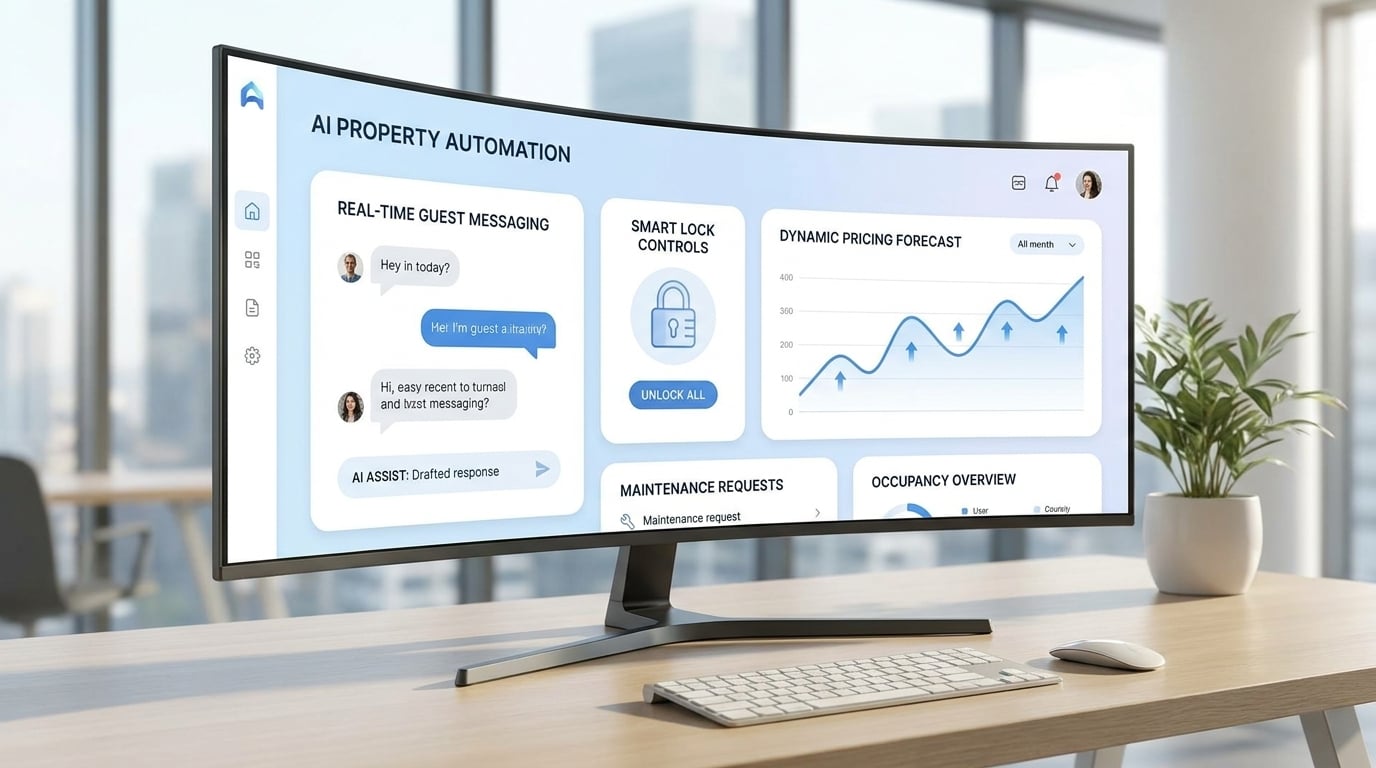
Consider the most common AI feature in property management: automated guest messaging. Every major PMS now offers some version of this.
In a system where AI was added on top of a PMS, the messaging AI has access to what the PMS exposes through its API — typically the guest name, check-in date, check-out date, and booking channel. When a guest asks whether they can check in two hours early, the AI checks the check-in time, sees that standard check-in is 3pm, and responds with the standard check-in time. It does not know whether the previous guest has already left, whether cleaning is complete, or whether the property is actually available at 1pm. So it gives a technically accurate but operationally useless answer — and a human has to follow up.
In an AI-native system, the messaging AI has access to everything: the live cleaning status, the previous guest's checkout confirmation, the maintenance log, the access code rotation schedule, the guest's full booking history. When the same guest asks the same question, the AI checks all of this in real time and gives an accurate answer — either confirming that 1pm is possible and automatically flagging the cleaning team, or giving the guest a specific expected time based on the actual cleaning schedule. No human involvement required.
This is why AI-native systems achieve 98 percent guest communication automation while AI-augmented systems plateau at 50 to 70 percent. The ceiling is set by the architecture, not the AI model.
What to Ask to Tell the Difference
When a vendor describes their platform as AI-native, ask these questions:
- Does your AI have access to real-time room status and cleaning completion data — not scheduled syncs, but live data?
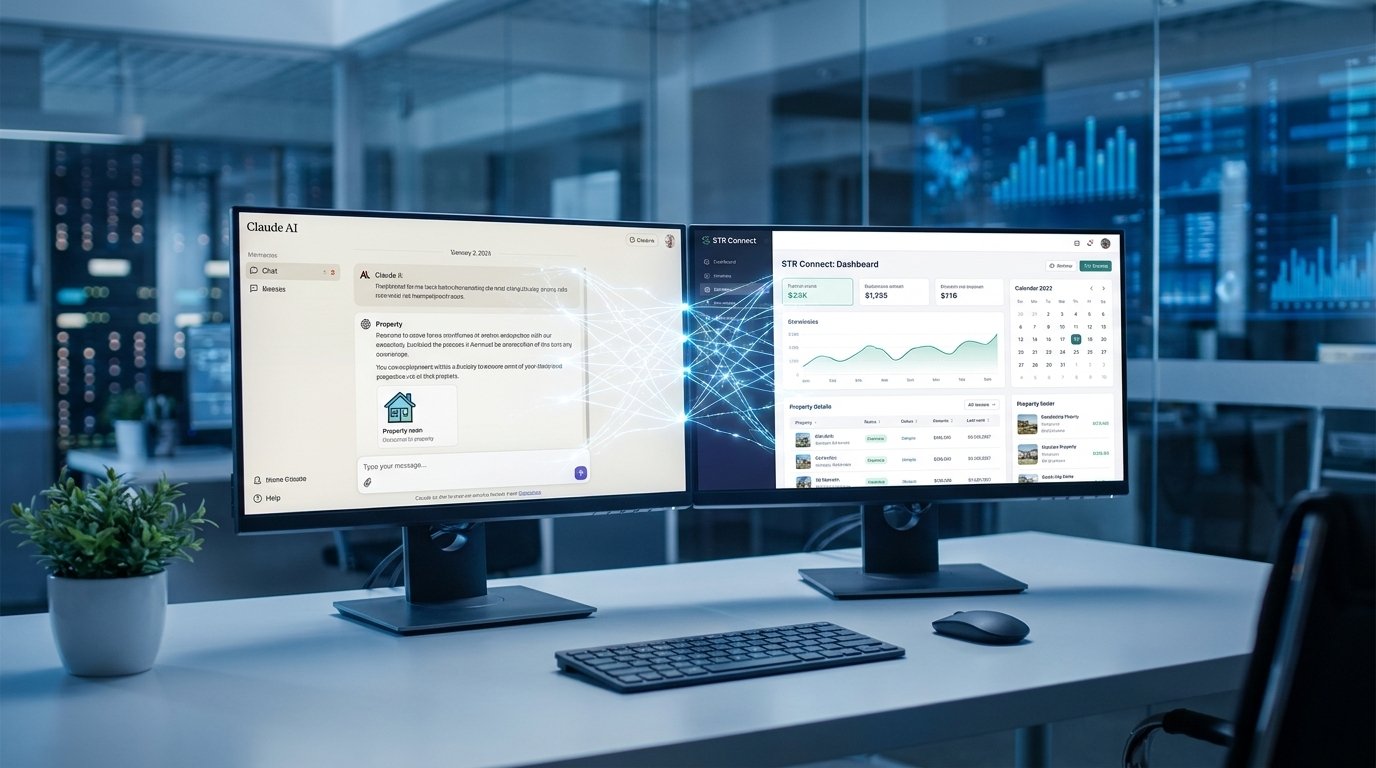
- Is your AI a native component of the platform, or does it connect to the PMS through an API integration?
- What is your documented guest communication automation rate from live operations — not a demo?
- Can your AI take autonomous action — create maintenance tickets, update room status, trigger cleaning assignments — or does it only suggest actions for a human to approve?
The answers will tell you immediately whether you are looking at a genuinely AI-native system or a traditional PMS with AI features marketed as something more.
Why It Matters for the Future of Your Business
The short-term rental industry is in the early stages of a bifurcation between operators who have built on AI-native infrastructure and operators who have not. The gap between these two groups will widen as AI capabilities improve — because the ceiling for AI performance in a native system rises with every model improvement, while the ceiling for AI performance in a bolted-on system remains constrained by the architecture it sits on.
Operators who choose AI-native infrastructure now are building on a foundation that compounds. Every improvement to the underlying AI benefits their operation automatically. Operators who choose traditional PMS with AI features are choosing a system that will require periodic rebuilds as the gap between what their AI can do and what AI-native competitors can do becomes too large to ignore.
Jurny is the first AI-native operating system built specifically for short-term rental operators. Book a demo to see the difference between AI-native and AI-augmented in a live environment.
Explore Jurny: