There is a version of vacation rental upselling that feels like being sold to. The email arrives before check-in: "Upgrade your stay! Early check-in available for $35." It is generic. It could have been sent by any property to any guest. And because it could have been sent to anyone, most guests treat it accordingly — as something to scroll past.
There is another version of upselling that feels like being known. The message arrives two days before a guest's fifth stay at your portfolio of properties: "Welcome back. Since you're arriving on an anniversary weekend, we thought you might want to know about our private chef experience — it books out fast for Saturday evenings." The guest did not know that experience existed. They book it within the hour.
The difference between these two experiences is not the offer. It is the personalization. And personalization, at scale, requires knowing who each guest is — which requires data infrastructure most STR operators do not currently have.
What Personalization Actually Requires
Real personalization is not about using a guest's first name in an email subject line. It is about understanding the context of their stay and using that context to make the right offer at the right time.
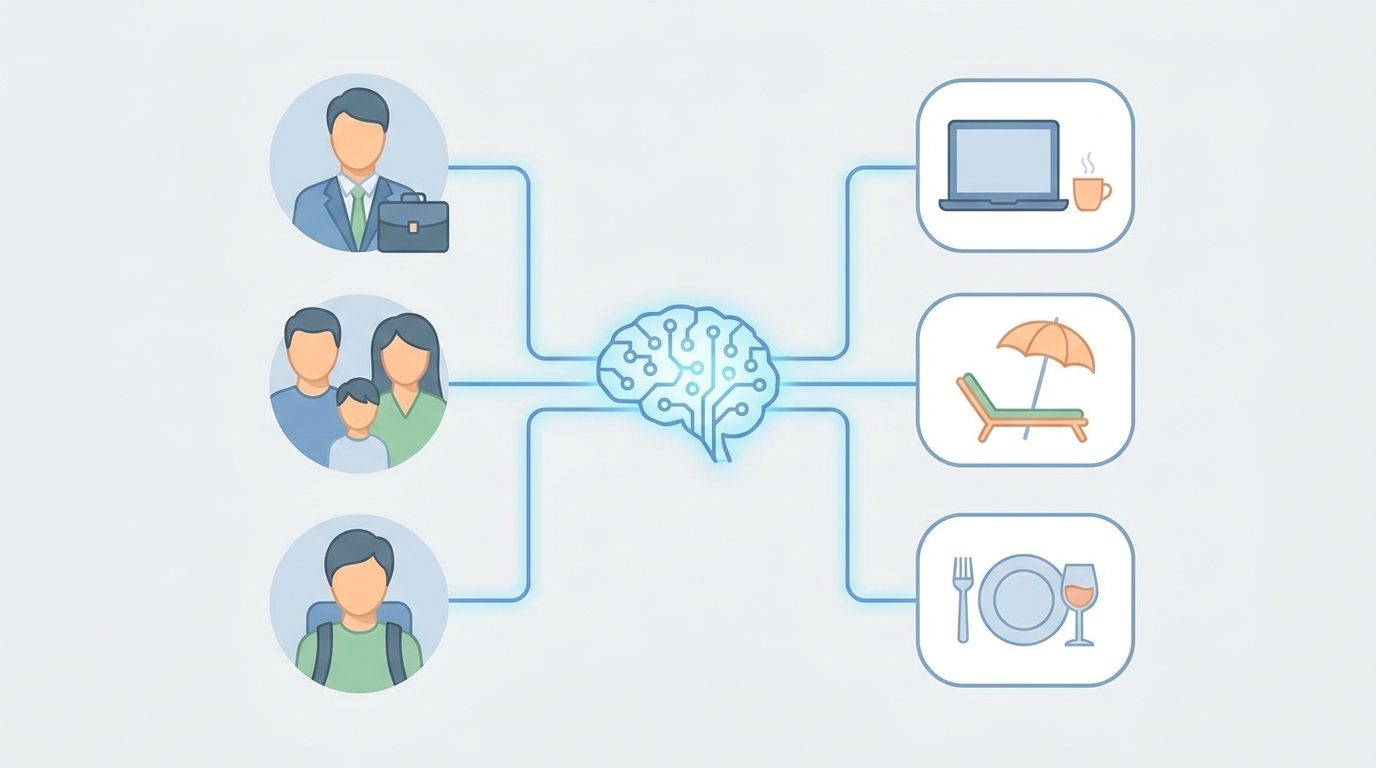
The relevant context for a personalized upsell includes:
- Who the guest is: First-time visitor or returning guest? Solo, couple, family, or group? Business or leisure?
- Why they are staying: Anniversary, birthday, vacation, work trip, relocation?
- How they booked: Last-minute or planned in advance? Which channel?
- What they have purchased before: Did they take early check-in on their last stay? Did they leave feedback about wanting a welcome package?
- What property they booked: A mountain cabin calls for different upsells than a Miami beach condo
- What is actually available: Is early check-in genuinely possible based on the cleaning schedule?
None of this context is available to a standalone upsell tool that connects to your PMS via API and has access to the reservation record but nothing else. A reservation record tells you the guest's name, their dates, and what they paid. It does not tell you that this is their fourth stay, that they left a review mentioning they wished the welcome snacks were more substantial, or that their check-in date falls on their tenth wedding anniversary.
Building Guest Profiles That Drive Personalization
The foundation of personalized upselling is a guest CRM that captures and connects data across every interaction, every stay, and every property in your portfolio.
When a guest stays with you for the first time, the stay generates data: arrival time, length of stay, how they communicated during the stay, what they asked about, whether they had any issues, what their review said, whether they responded to any upsell offers. When they stay again, all of that historical context informs what the next upsell offer should be.
This is not complex in principle. It is complex in execution because most STR technology stacks do not centralize this data. The guest messaging tool does not share data with the PMS. The review management system does not share data with the upsell platform. The guest who stayed at three of your properties last year is a stranger in each system because the systems do not communicate.
The Upsell Timing Problem
Even with the right data, timing determines whether an upsell converts or irritates.
The research on upsell timing in hospitality is consistent: the highest-converting moments are immediately after booking (when guests are still in the excitement of the reservation), 48-72 hours before arrival (when guests are mentally preparing for the trip), and during the stay when a specific need arises.
The lowest-converting moment is during the booking process itself — guests are already making a financial decision and do not want to be cross-sold while they are completing it.
An upsell system that sends offers at the right timing intervals — automatically, based on the reservation timeline — outperforms one that sends on a fixed schedule regardless of where the guest is in their pre-arrival journey. And an upsell system that can detect an in-stay moment and respond to it — "I noticed you mentioned you'd like an extra set of towels, would you like us to add a mid-stay refresh?" — generates the kind of guest experience that produces the reviews operators actually want.
The Revenue Math
At a 30% average upsell conversion rate on a $60 average offer value, fifty bookings per month generates $900 in incremental upsell revenue per month — from a single property. Across twenty properties with similar booking volumes, that is $18,000 per month in revenue that requires no additional headcount, no new guests, and no change to your base pricing.
The same portfolio at 4% conversion — the industry default for generic upsell campaigns — generates $2,400 per month. The difference between a generic and a personalized upsell program, at scale, is not marginal. It compounds every month.
Inside Jurny, NIA's personalized upsell engine draws on the full guest profile — history, preferences, booking context, property-specific availability — to deliver offers that feel relevant rather than automated. The system learns what converts for different guest segments across your portfolio and optimizes over time.
If you are running generic upsell campaigns and wondering why conversion rates are low, the answer is almost always the same: the offer is right, but the context is wrong. Book a demo to see what personalized upsell automation looks like for operators at your portfolio size.
Explore Jurny: