|
Quick Answer AI guest personalization in vacation rentals means using intelligent automation to tailor communication, upsell timing, and service delivery to each individual guest — without manual effort. Property managers who get this right consistently outperform competitors on reviews, repeat bookings, and revenue per unit. |
Your guests are not looking for the same trip. A family on a weekend getaway wants different information than a solo business traveler or a couple celebrating an anniversary. They have different arrival times, different questions, different things they want to buy — and different reasons they leave a 5-star versus a 3-star review.
For most of the history of property management, "personalization" meant adjusting a message template by hand. It was slow, inconsistent, and impossible to scale.
That's no longer true.
The Business Case: Why Personalization Is a Revenue Lever
The short-term rental guest has been shaped by a decade of hotel-style service expectations. They expect fast responses, relevant information at the right moment, and personal touches. Research by Salesforce found that 73% of customers expect companies to understand their unique needs and expectations. That expectation doesn't disappear when someone books a vacation rental.
According to a comprehensive 2024 STR industry study, guest communication quality remains one of the top three drivers of review scores. These scores are the lifeblood of your business, directly dictating OTA search rankings, booking conversions, and RevPAR.
Personalization is not a nice-to-have. It is a revenue lever. The problem is that manual personalization doesn't scale. A property manager with 10 units can send thoughtful, customized messages to every guest. At 50 units, that's physically impossible. At 100+ units, you're choosing between quality and volume — unless you have the right system.
What AI Guest Personalization Actually Looks Like at Scale
-
Timing-aware messaging. Instead of sending a check-in message at a fixed time, an AI-powered system sends it when the guest is actually en route — based on their stated arrival time or booking signals.
-
Context-specific recommendations. A guest arriving Friday for a 3-night weekend gets local restaurant picks and weekend event suggestions. A business traveler arriving Tuesday evening gets WiFi details and early-morning coffee spots. Same property. Different experience.
-
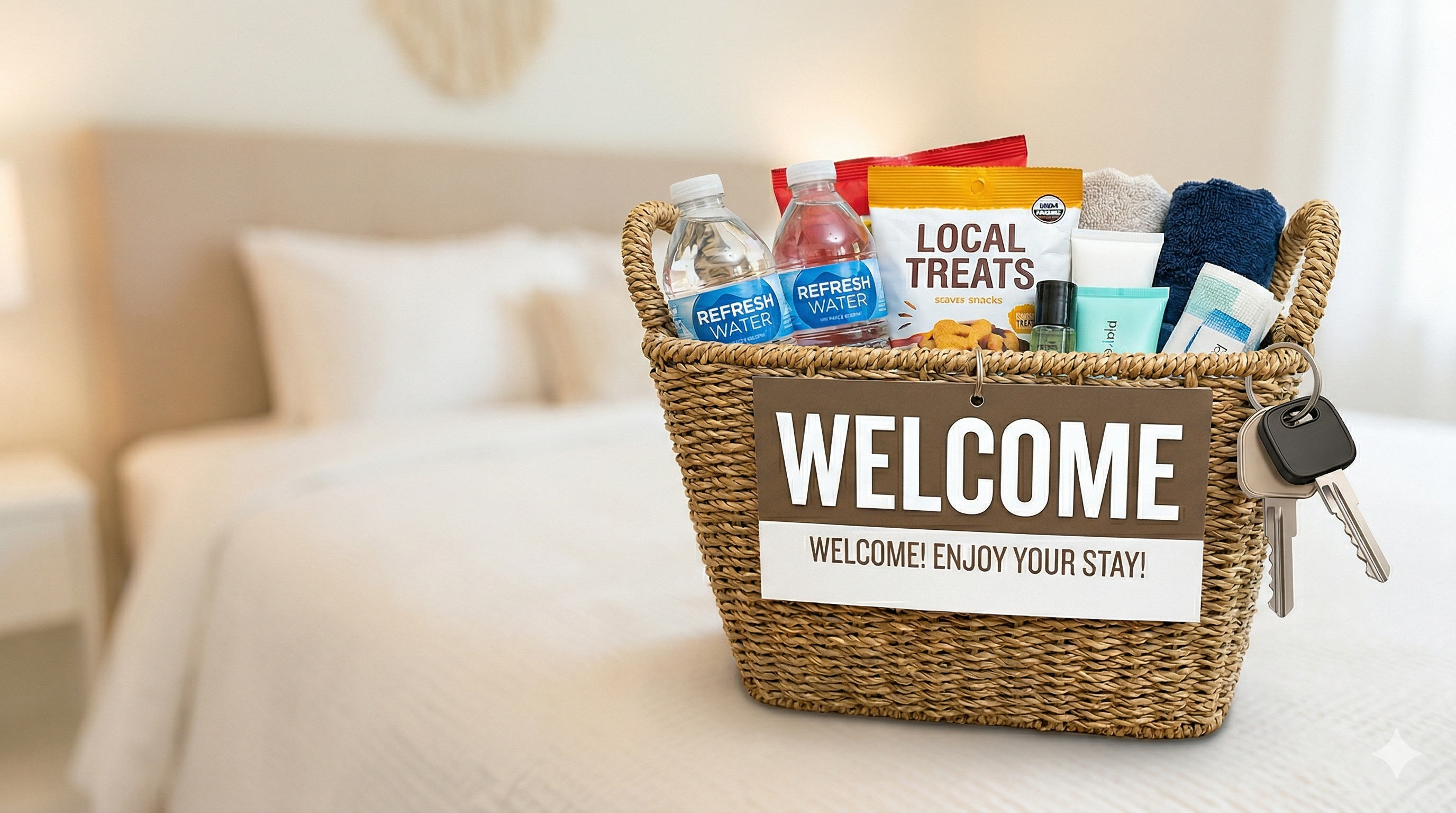
Behavioral upsells. Instead of offering every guest every add-on, AI-powered systems identify which guests are likely to buy what — early check-in, late check-out, welcome packages — and deliver the offer at the moment most likely to convert.
-
Proactive issue resolution. Instead of waiting for a guest to report a problem, a smart system monitors maintenance records, cleaning logs, and past feedback to flag potential issues before the guest arrives.
The Four Pillars of AI-Powered Guest Personalization
1. Smart Guest Communication
AI messaging tools now handle the vast majority of inbound guest inquiries — generating contextual, personalized replies based on the guest's question, the property's details, and the stage of the booking. The result is faster response times and higher communication quality than most operators can maintain manually at scale. Industry data consistently shows AI-assisted systems handle 80 to 90 percent of guest messages without any human involvement.
2. Personalized Upsell Timing
Upsells offered at the wrong time fail. A late check-out offer sent at the time of booking is largely ignored. The same offer sent the evening before check-out — when a guest is relaxed and thinking about their next morning — converts dramatically better. AI systems optimize upsell timing and relevance based on guest behavior and booking patterns.
3. Review Generation Optimization
AI-powered review request systems identify the ideal window to make the ask, personalize the request, and follow up intelligently. This kind of optimization is invisible to the guest but measurable in your business outcomes.
4. Continuous Improvement via Feedback Loops
The best AI personalization systems don't just execute workflows — they learn. Each guest interaction generates data that improves future recommendations. A system running for six months knows more about your guest profile than one that started last week.
What Separates Properties That Get 4.8 Stars vs. 4.5 Stars
It's rarely the property itself. Properties at 4.8 and above deal with the same broken lightbulbs, the same occasional noise complaint, the same bad-weather weekend as those averaging 4.5.
What separates them is the experience gap: how proactively problems are addressed, how personal the communication feels, how clearly the host anticipated what the guest would need.
Those things used to require a genuinely attentive human. In 2025, they can be systematized — and the operators who treat guest personalization as a systems problem consistently outperform those who don't.
How Jurny Handles Guest Personalization
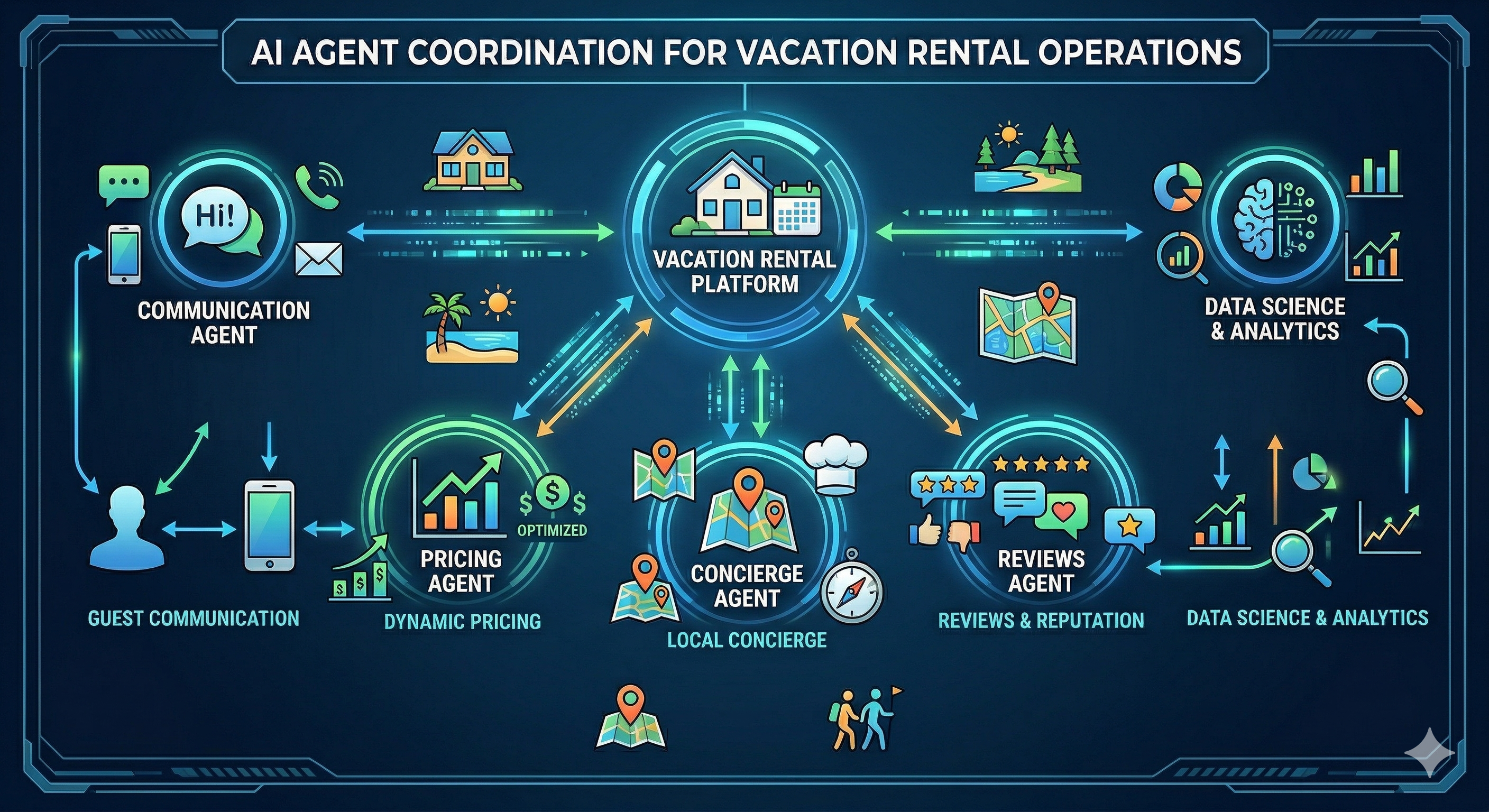
Jurny's NIA (Network of Intelligent Agents) handles guest communication, upsell delivery, and service coordination autonomously — across all units, around the clock. NIA agents answer guest questions, coordinate check-in logistics, deliver timed upsell offers, and escalate anything that genuinely requires a human.
The goal is not to remove the human element of hospitality. It is to make sure every guest feels like they have a property manager's full attention — even when that's one person managing 150 units.
|
Frequently Asked Questions |
|
What is AI guest personalization in vacation rentals? AI guest personalization means using intelligent automation to tailor guest communication, service delivery, and purchase offers to the individual guest — based on their booking details, arrival timing, and travel context. The goal is to make each guest feel like the property was prepared specifically for them, at a scale no manual process can match. |
|
How can I personalize the guest experience when I manage dozens of units? This is exactly where AI becomes essential. AI-powered PMS platforms automate personalized guest communication, time upsell offers based on individual behavior, and flag potential issues before guests arrive — across every unit simultaneously, without per-booking manual effort. |
|
Does AI-generated messaging affect response time negatively? It dramatically improves it. AI messaging systems generate contextual, personalized responses within seconds — far faster than any human reviewing a message queue. Response time is a direct OTA ranking factor, so faster responses have measurable business impact. |
|
What upsells work best with a personalized approach? The highest-converting upsells in STR are early check-in, late check-out, welcome packages, local experience recommendations, and property-specific add-ons. The key is timing and relevance — offering the right thing to the right guest at the right moment rather than blasting every offer at the time of booking. |
|
Will AI personalization actually improve my review scores? Property managers implementing AI-driven communication and upsell systems consistently report measurable improvements in guest satisfaction. Faster responses, proactive service, and well-timed communication all contribute to the sense of attentiveness that drives 5-star reviews. |
Ready to deliver 5-star guest experiences at scale?
→ See how Jurny's NIA agents handle personalization → jurny.com/demo
Explore Jurny: