When most property managers hear "solo-managed portfolio of 15 units," they imagine either a burnt-out operator drowning in messages — or someone with a trust fund who doesn't actually do the work. The reality in 2026 is more interesting: a growing number of operators are managing 10, 15, even 25+ properties with one person running the show. And they're not working 80-hour weeks to do it.
The shift isn't about working harder. It's about eliminating the manual work that traditional property management is built around. When you look closely at what these operators have automated versus what they still handle personally, a clear pattern emerges — and it's replicable.
This guide breaks down exactly how a one-person operation manages a double-digit property portfolio without losing their mind, their reviews, or their weekends.
|
Quick Answer (TL;DR) Managing 10+ vacation rental properties solo is achievable in 2026 — but only if you've automated the right things. The key is eliminating the high-volume, repeatable tasks (guest messaging, check-in, pricing, upsells) through AI-native tools and reserving your personal attention for the high-judgment work that genuinely requires a human. |
Why the Old Model Breaks at 5+ Properties
The traditional approach to scaling a vacation rental business goes like this: grow to 5 units, realize you can't handle the communication volume, hire a VA. Grow to 10, hire another VA or an operations coordinator. By 15 units, you have a 3-person team, significant payroll overhead, and a coordination layer that's as much work as the properties themselves.
The pattern is consistent across operators who’ve tried to scale manually: growth stalls when the communication volume exceeds what one person can handle. The constraint isn’t ambition — it’s the volume of repetitive, time-consuming tasks that don’t require judgment, just availability.
The operators breaking this ratio share a common trait: they've automated the work that creates the staffing demand in the first place. Specifically, guest communication (which accounts for 60–70% of daily active management time in a manual operation) and the operational coordination that flows from it.
Once guest communication is automated and operations are systematized, the human bottleneck moves from "I can't handle the message volume" to "I can only sign leases, manage contractors, and handle owner calls for so many properties." That's a fundamentally different — and much more scalable — constraint.
The 7-Layer Automation Stack of a Solo Operator
Here's what the operational architecture looks like for a solo operator managing 10–20 properties in 2026. Each layer removes a specific category of manual work:
Layer 1: AI-Native Guest Communication
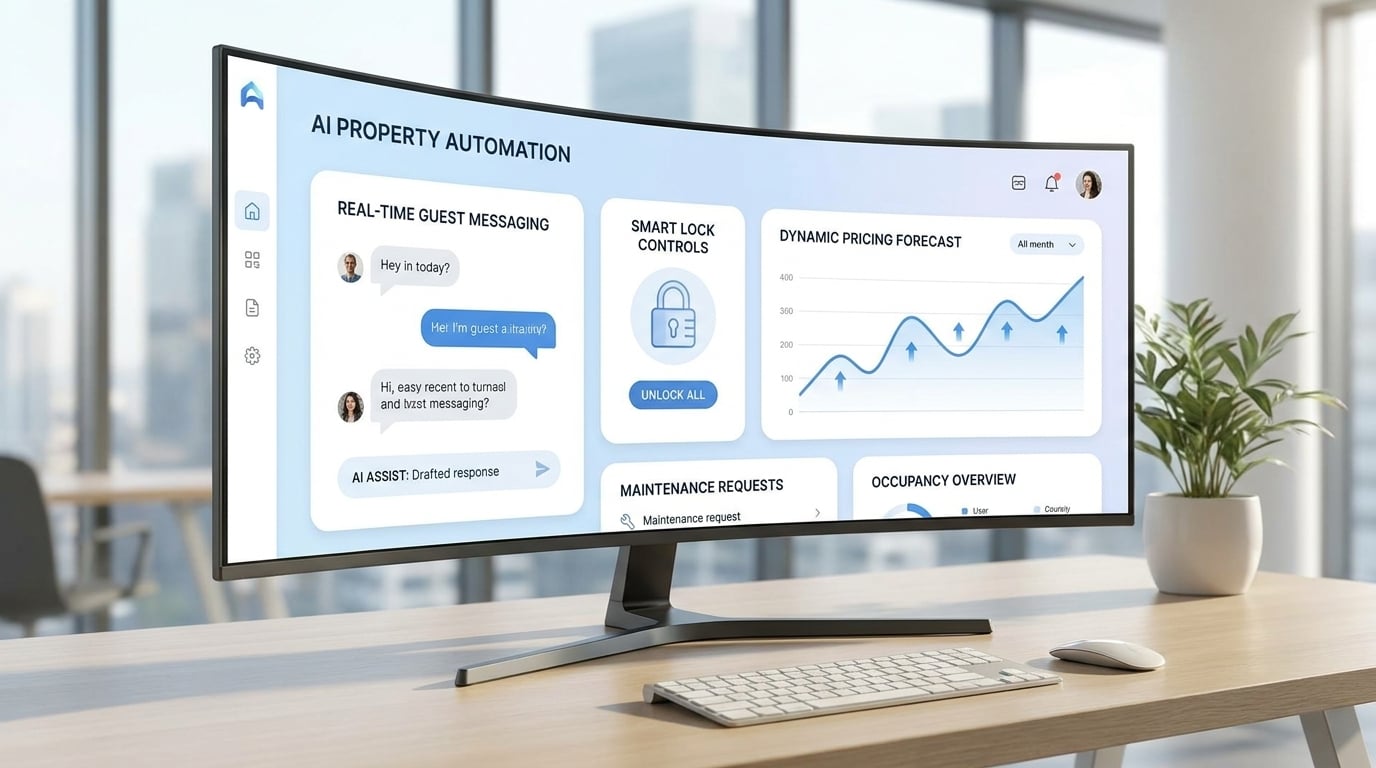
This is the foundation. An AI-native system (not a rule-based chatbot) handles 80–90% of guest messages autonomously — pre-booking questions, check-in instructions, mid-stay support, checkout reminders, and upsell offers. The operator's role shifts from responding to messages to reviewing flagged escalations.
What this replaces: 1–2 hours of daily messaging for a 10-property portfolio. At scale, this is the single highest-leverage automation available.
Layer 2: Automated Check-In and Check-Out
Digital check-in with smart lock codes or keypad access means guests self-check-in without any operator action required. Check-out confirmation and damage reporting flows are automated. The operator only engages when there's a documented issue.
What this replaces: Phone coordination, key exchanges, and the constant anxiety of "did the guests actually get in?"
Layer 3: Dynamic Pricing on Autopilot
AI-native pricing adjusts rates daily across all channels based on demand signals, competitor rates, booking pace, and your property's historical performance. The operator reviews a weekly summary but doesn't touch individual rates.
What this replaces: 20–40 minutes of daily pricing decisions, multiplied across every property.
Layer 4: Automated Upsell Sequencing
At the right moments in every reservation journey — post-booking, pre-arrival, day-of — automated upsell offers are sent to guests. Early check-in, late checkout, mid-stay restocking, local experience packages. No manual triggering required.
What this replaces: The upsell revenue most manual operators leave on the table entirely, because they forget to send the offer consistently.
Layer 5: Housekeeping Coordination via Ops Automation
Housekeeping is auto-scheduled based on the reservation calendar. The cleaning team gets automated task notifications with unit-specific checklists. Post-clean confirmation triggers the lock code release for the next guest.
What this replaces: Manual scheduling calls, "did cleaning finish?" check-ins, and the late guest arrival scramble.
Layer 6: Review Request and Response Automation
Post-checkout, an automated review request goes to the guest. When reviews come in, AI drafts a response for the operator's one-click approval. Review monitoring sends alerts for anything below 4 stars.
What this replaces: 20–30 minutes daily of review monitoring and response writing.
Layer 7: Centralized Multi-Channel Calendar Management
A native channel manager keeps calendars synced across Airbnb, Vrbo, Booking.com, and your direct booking site in real time. No manual blocks, no double-booking risk.
What this replaces: The single most error-prone manual task in STR operations — and the one most likely to generate a 1-star review.
What a Solo Operator's Day Actually Looks Like at 15 Properties
|
Real Day in the Life: 15-Unit Solo Operator Using AI-Native Platform 7:30am — Review AI priority dashboard: 2 flagged escalations (one late checkout request needing approval, one maintenance report from a guest). Handle both in 10 minutes. 8:00am — Approve this week's pricing adjustments (AI-generated summary, operator confirms or overrides). 5 minutes. 8:30am — Batch approve 4 review responses drafted by AI. Personalize one where a guest left a 3-star rating — requires personal touch. 15 minutes. 10:00am — Quick check on upcoming reservations for the week. Confirm housekeeping is scheduled for 3 checkouts. 5 minutes. Throughout day — 3–4 escalated messages from AI that require human judgment. Average 2 minutes each. Total active management time: ~60–75 minutes across the entire 15-property portfolio. |
The Tasks You Should Never Automate
The operators who struggle with solo management often automate everything — including the things that should stay human. Here's what to keep:
- Owner communication and relationships — Property owners are your business partners. They need a human relationship, not an AI touchpoint. Protect your owner communication time as non-negotiable.
- High-stakes guest recovery — When a guest experience has gone seriously wrong and review damage is likely, a personal, thoughtful human response changes the outcome in ways AI can't reliably replicate.
- New property onboarding — Setting up a new property for the first time — understanding its specific quirks, photographing it, writing the listing — requires human judgment.
- Contractor and vendor relationships — Your cleaning team, your maintenance crew, your locksmith. These relationships determine how quickly your property problems get solved. Automate the scheduling; keep the relationship.
Tools Every Solo Operator Needs
You don't need a dozen apps. The operators managing 15+ properties solo are typically running a very tight stack:
1. AI-native PMS with built-in NIA — This does the heavy lifting: reservations, channels, messaging, pricing, upsells, and ops automation in one platform. This is not the place to compromise.
2. Smart locks / keypad access — Schlage, Yale, or August smart locks connected to your PMS for automated code generation and entry logging.
3. Housekeeping app — If your PMS doesn't have native housekeeping coordination, add a dedicated tool that auto-schedules and tracks completions.
4. Direct booking site — Reduce OTA dependence with a simple direct booking site to capture repeat guests and reduce commission spend.
This Is Exactly the Problem Jurny Was Built to Solve
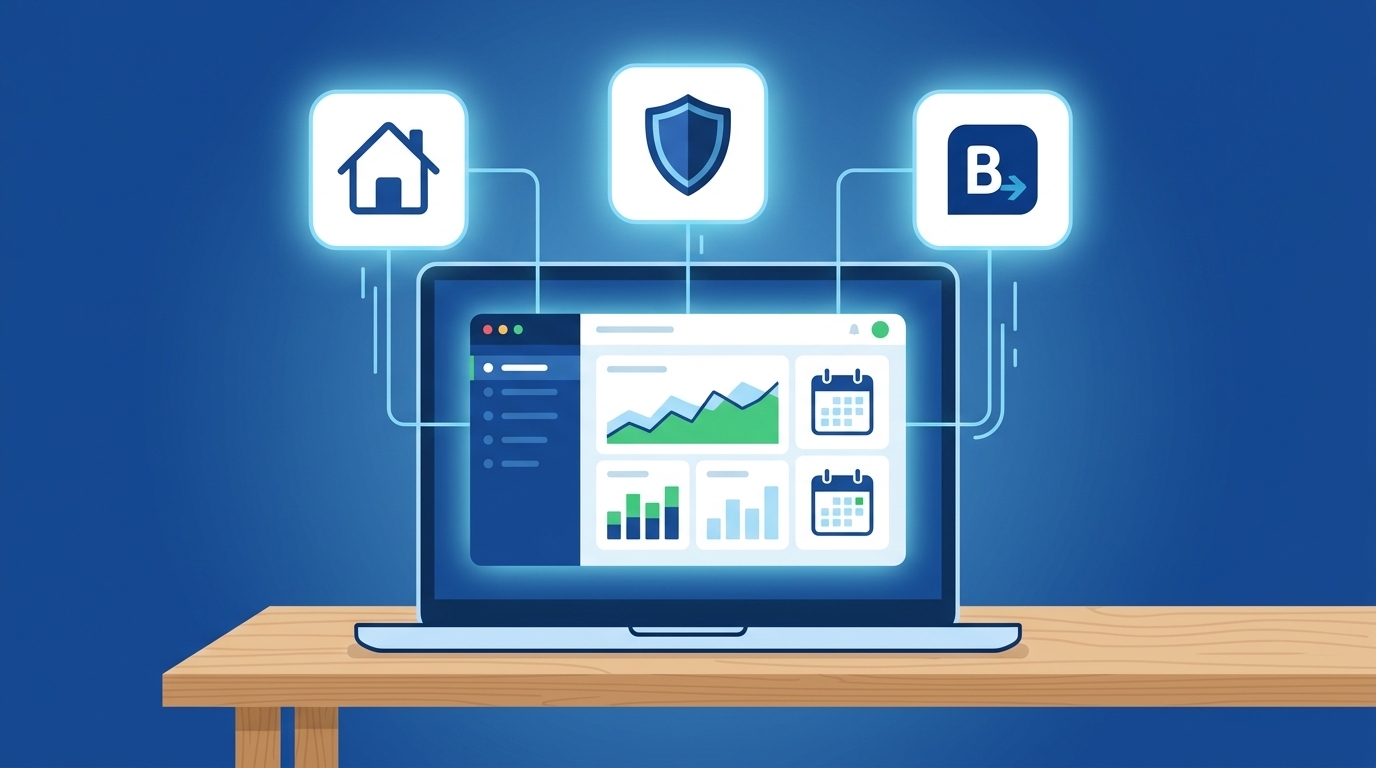
Jurny was designed from the ground up for operators who want to scale without scaling their headcount. NIA handles guest communication around the clock. Pricing updates automatically. Upsells are triggered at optimal moments without manual intervention. The keeps everything in sync across all your platforms.
The operators on Jurny managing 15+ properties solo aren't superhuman — they've just stopped doing the work that the platform does better than they can.
Frequently Asked Questions
Is it really possible to manage 10+ STR properties solo, or is that just a marketing claim?
It's real — but it requires the right automation stack. Operators relying on manual workflows genuinely cannot manage 10+ units solo without burning out. With AI-native tools handling guest communication, pricing, and ops coordination, 15–25 units is achievable for a single person. Industry forums like BiggerPockets and STR Facebook groups have extensive operator accounts of this approach working at scale.
What's the biggest mistake solo operators make when trying to scale?
Trying to add properties before automating existing ones. Scaling a manual operation just means more of the same work. The right sequence is: automate communication and ops at your current unit count, prove the model works, then add properties into the same automated framework.
How do I handle emergencies at 3am when I'm the only person?
AI handles the initial response and triage for 90%+ of middle-of-the-night situations — it reassures the guest, logs the issue, and only escalates if there's a genuine emergency. For true emergencies (fire, flooding, security), your AI platform should have an emergency escalation protocol that reaches you directly. And your contractor relationships should include 24/7 emergency contacts for each property market.
What happens to my guest satisfaction scores when I go solo?
Counterintuitively, most operators see guest satisfaction improve after implementing AI-native communication — because response times drop from hours to seconds and consistency improves dramatically. The 2–3 star moments in most portfolios are due to slow responses and inconsistent communication, not lack of human touch.
At what property count should I consider hiring support staff?
Most solo operators find the natural breakpoint is 20–25 properties, at which point physical coordination (contractor management, owner visits, new property setups) begins to create meaningful time pressure. At that stage, one part-time operations coordinator — not a full-time team — typically provides the leverage needed to scale further.
See how Jurny's platform helps property managers run more units with less effort. Book a demo →
Explore Jurny: