
There are two ways to improve margins in a short-term rental business. The first is to increase revenue. The second is to reduce the cost of generating that revenue. Most operators spend the majority of their optimization energy on the first — pricing, occupancy, upsells — and relatively little on the second.
This is understandable. Revenue growth is visible and exciting. Cost reduction feels like austerity. But at scale, the cost side of the equation is often where the largest improvements are hiding — not through cutting quality, but through eliminating the structural inefficiencies that accumulate when you run a large portfolio on systems designed for a much smaller one.
The Hidden Costs of Running a Large STR Portfolio
When operators think about their costs, they think about the obvious ones: platform commissions, cleaning fees, mortgage or rental payments, property maintenance. These are the costs that show up on the P&L.
The costs that are harder to see — but often larger in aggregate — are the operational costs embedded in how the business runs:
The Cost of Manual Coordination
Every manual task in your operation has a cost — either your time or your team's time. The message that required a human response when it could have been handled automatically. The cleaning handoff that required a phone call when it could have been triggered by a system. The pricing adjustment that required thirty minutes of dashboard review when it could have executed automatically.
At five properties, these are small inefficiencies. At twenty-five, they are measurable cost centers. Operators who have quantified their operational time against a market rate for that time consistently find that manual coordination represents one of the largest costs in their business — one that does not appear on any invoice.
The Cost of Errors
Double bookings, missed cleaning handoffs, incorrect access codes, unresolved maintenance issues — these errors are expensive. A single double booking costs the refund amount, the relocation cost, a potential platform penalty, and the long-term revenue impact of a permanent negative review. These are not costs that appear regularly enough to feel like a line item — they appear occasionally, hit hard, and are easily dismissed as one-off events.
They are not one-off events. They are predictable outcomes of fragmented systems operating at scale. The operators who have eliminated them have done so not by being more careful, but by building systems where the errors cannot occur.
The Cost of a Fragmented Stack
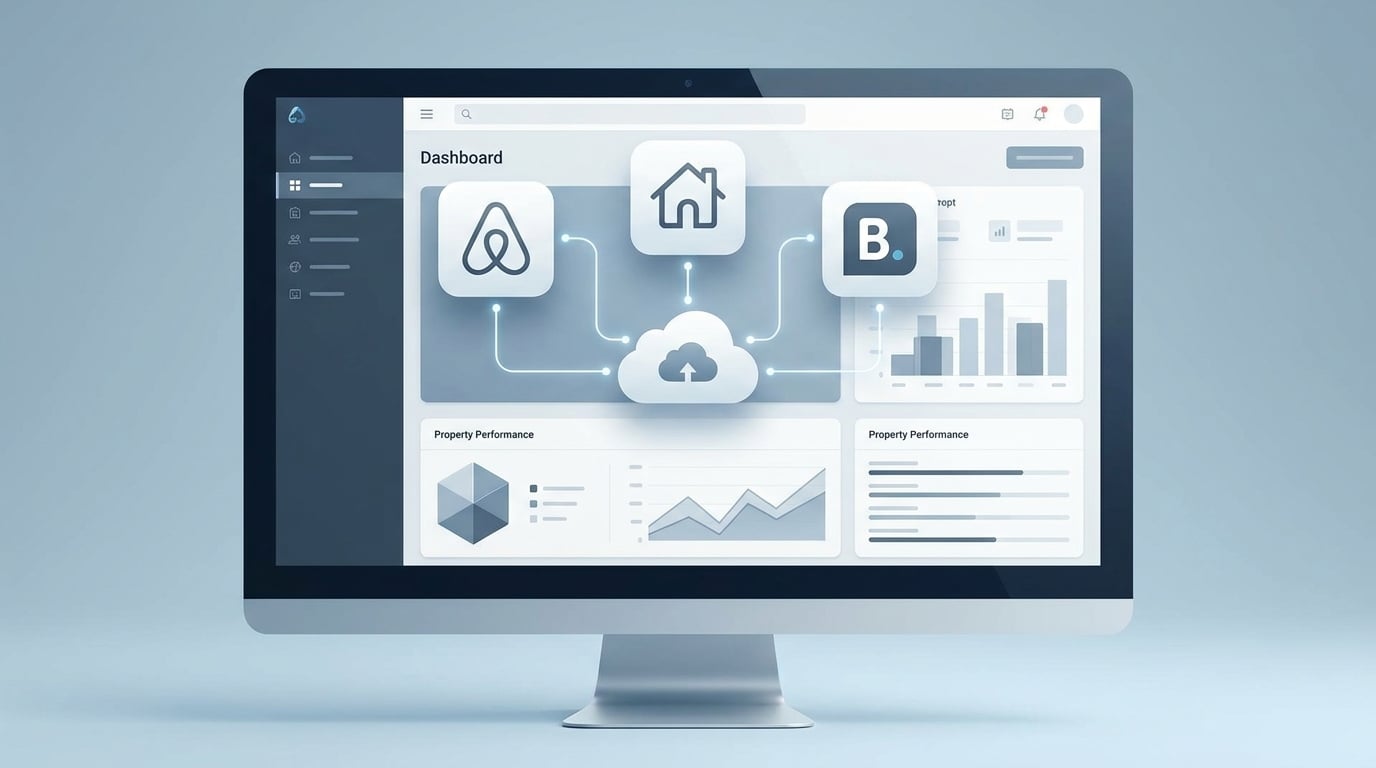
The average operator managing fifteen or more properties is paying for six to ten separate software subscriptions. Each one serves a function. None of them talk to each other without manual intervention. The combined subscription cost is significant — but the hidden cost of the integrations is larger. Every gap between tools is a place where someone has to intervene manually, and that intervention time has a cost that never appears on a software invoice.
Where the Real Savings Are
Automation of Routine Operations
The highest-leverage cost reduction in most STR businesses is automating the routine operational work that currently requires human time. Guest messaging that resolves 98 percent of inquiries automatically. Cleaning coordination that triggers without manual input. Check-in instructions that deliver at the right time without someone composing and sending them.
Inside Jurny, NIA handles these workflows automatically. The operational overhead that would require one team member per ten to fifteen properties on a manual system can support thirty to fifty properties on an automated one. That difference in team size is a direct cost reduction — and it compounds as the portfolio grows.
Stack Consolidation
Replacing six to ten separate subscriptions with a single platform that covers messaging, channel management, pricing, cleaning coordination, verification, and upsells reduces both the direct subscription cost and the hidden coordination cost between systems. Operators who have made this consolidation typically report saving between $800 and $2,000 per month in direct subscription costs alone — before accounting for the operational time saved.
Error Prevention
Building systems where double bookings, missed handoffs, and access errors cannot occur through process automation is not just an operational improvement — it is a direct financial improvement. A single double booking per quarter at a property averaging $200 per night represents $1,200 to $2,400 in direct costs, plus the downstream revenue impact of the resulting review. Eliminating this category of error entirely pays for significant infrastructure investment.
Revenue Yield Improvement
Cost reduction and revenue improvement are not separate conversations. Dynamic pricing that is connected to real-time demand signals and gap-fill optimization consistently improves revenue per available night by 15 to 25 percent compared to manual pricing. That improvement, at scale, is a larger number than most cost-cutting measures — and it comes from better systems, not lower quality.
The Margin Math at Scale
Operators who have consolidated their operations onto an AI-native platform and built genuine automation across their routine workflows describe the same outcome: margins improve without quality declining. Not because they cut corners, but because the cost of running the business decreases as the systems take over the work that was previously done manually.
This is the actual promise of operational efficiency in short-term rentals. Not doing more with less effort. Doing more with the same effort, because the systems absorb the volume that your team used to have to manage.
If you are managing fifteen or more properties and want to understand where your operational costs are hiding and what a more efficient model looks like, book a demo with Jurny.
Explore Jurny: