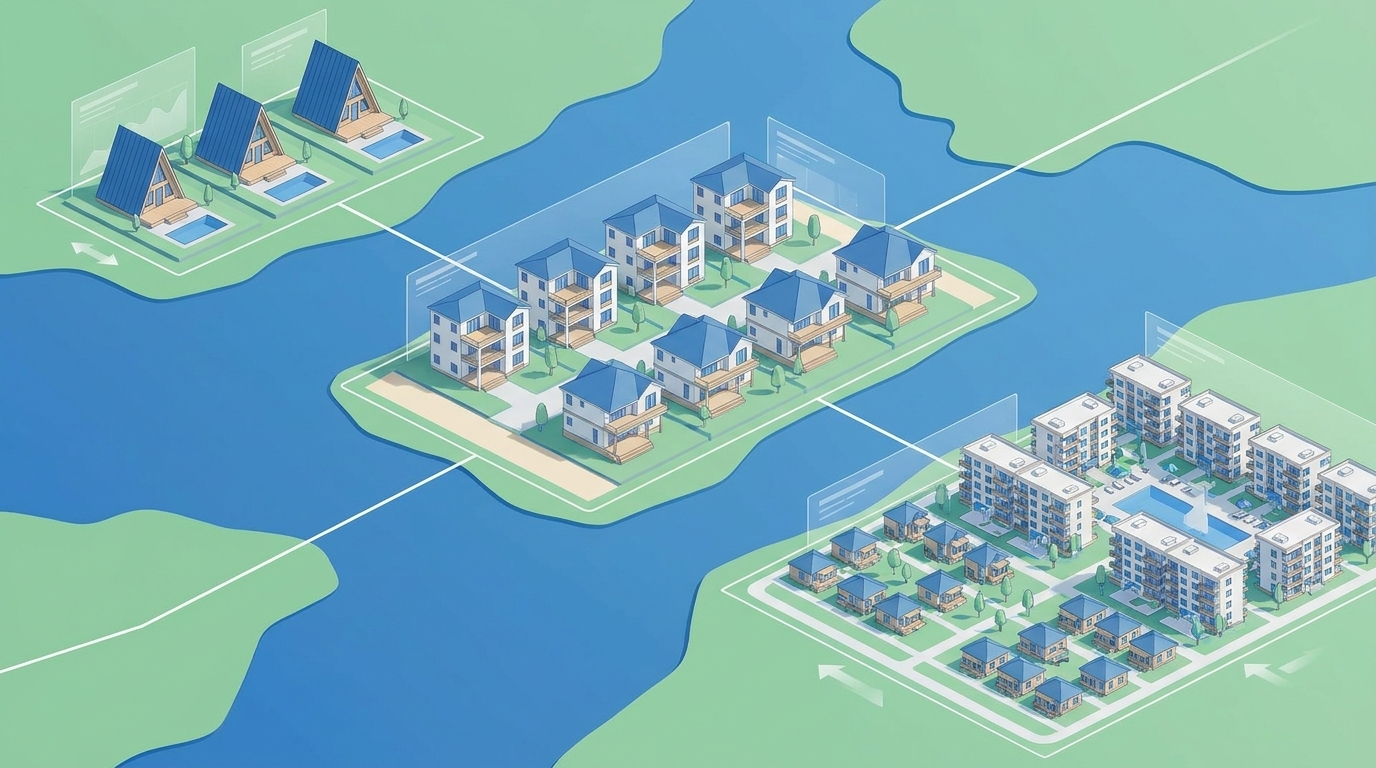
The experience of running fifteen properties on Jurny is operationally different from running five. But the experience of running fifty properties on Jurny is not operationally different from running fifteen. That is the point.
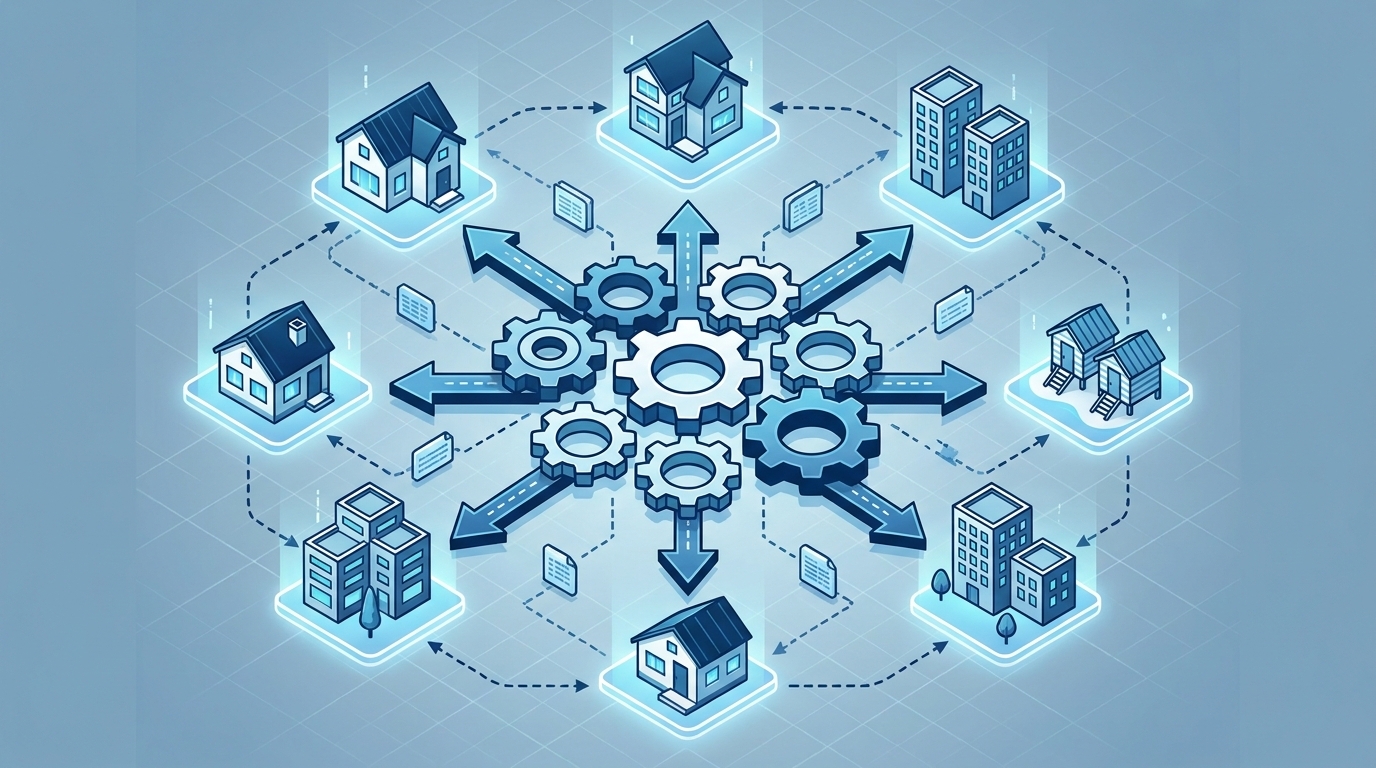
NIA — Jurny's network of intelligent agents — was designed around a specific premise: that the operational complexity of running a short-term rental portfolio should not scale linearly with the number of properties. The AI handles the volume. The operator handles the exceptions. As the portfolio grows, the volume handled by NIA grows proportionally. The exceptions requiring human judgment grow slowly.
This is not a theoretical claim. It is what the operators who have scaled their portfolios on Jurny describe when you ask them what changed as they grew.
What Changes When You Scale Without the Right Infrastructure
Before understanding what NIA does differently at scale, it helps to understand what typically breaks when operators scale without it.
The first thing to go is response time. At ten properties, you can maintain a genuine sub-one-hour response time across all channels with focused attention. At twenty-five, the message volume is such that sub-one-hour is only achievable with a dedicated team member whose primary job is message management. At fifty, you need multiple people — or a system.
The second thing to break is consistency. At small scale, you are personally present in the guest experience enough to maintain quality. At large scale, quality becomes a function of your systems — and inconsistent systems produce inconsistent guest experiences. The review average that was 4.9 at ten properties becomes 4.7 at thirty, not because you got worse at hospitality, but because the gaps in your systems started showing in guest feedback.
The third thing to fail is your own attention. Operators who scale without adequate automation describe the same experience: they stop being able to think strategically because they are consumed by operational firefighting. Every hour spent managing the stack is an hour not spent on acquisitions, partnerships, or the decisions that actually move the business forward.
What NIA Handles at 50 Properties That Would Require a Team Without It
Guest Communication
At fifty properties averaging four guest messages per day, NIA handles approximately 200 messages per day automatically — check-in logistics, access questions, amenity inquiries, early and late check-in requests, issue reports, review responses. The messages NIA escalates to humans are the ones that genuinely require judgment: complex complaints, unusual requests outside defined policies, situations where the guest is distressed and human empathy matters.
The 98 percent automation rate Jurny operators achieve means that at fifty properties, the message queue requiring human attention on a typical day is fewer than four items — not the 200 that would exist without automation.
Operations Coordination
Every checkout at fifty properties triggers a sequence: cleaning assignment, cleaning completion confirmation, room status update, maintenance flag review, and check-in instruction delivery for the next guest. At fifty properties with an average of thirty checkouts per week, this is 150 coordinated handoffs per week — each involving multiple steps and multiple parties.
NIA's operations agent handles these handoffs automatically. Checkout triggers cleaning assignment. Cleaning completion updates room status. Room ready triggers the next guest's check-in delivery. The sequence runs without a human coordinating each step. Exceptions — a cleaner who reports a maintenance issue, a guest who checks out late — are flagged and routed appropriately.
Sentiment Monitoring
At fifty properties, you cannot personally read every guest message and gauge whether a stay is going well. NIA does. Sentiment analysis running across every guest interaction flags dissatisfaction before it reaches the review stage. The guest who mentions in a casual message that the Wi-Fi has been unreliable gets a proactive response and a maintenance ticket — not a 2-star review two days later.
Upsell Delivery
At fifty properties with fifty bookings per month each, there are 2,500 monthly opportunities to offer a personalized upsell. NIA delivers the right offer to the right guest at the right moment — based on who they are, why they are staying, and what is actually available. At scale, this revenue stream is meaningful. At small scale without automation, it would require dedicated staff to manage.
What the Operator's Role Looks Like at Scale
Operators who run large portfolios on Jurny describe their relationship with the operation differently than operators running on fragmented stacks. They are not managing messages. They are not coordinating cleaners. They are not reviewing pricing dashboards daily.
They are looking at portfolio-level performance data. They are making decisions about new acquisitions. They are reviewing the exception queue — the things NIA flagged as requiring human judgment — and resolving them. They are thinking about their business strategy, not their software stack.
This is what NIA at scale actually delivers — not a set of AI features, but a different operating model. One where the operator's time goes to the decisions that only a human can make, and everything else runs.
If you are managing fifteen or more properties and want to understand what your operation looks like on this model, book a demo with Jurny.
Explore Jurny: