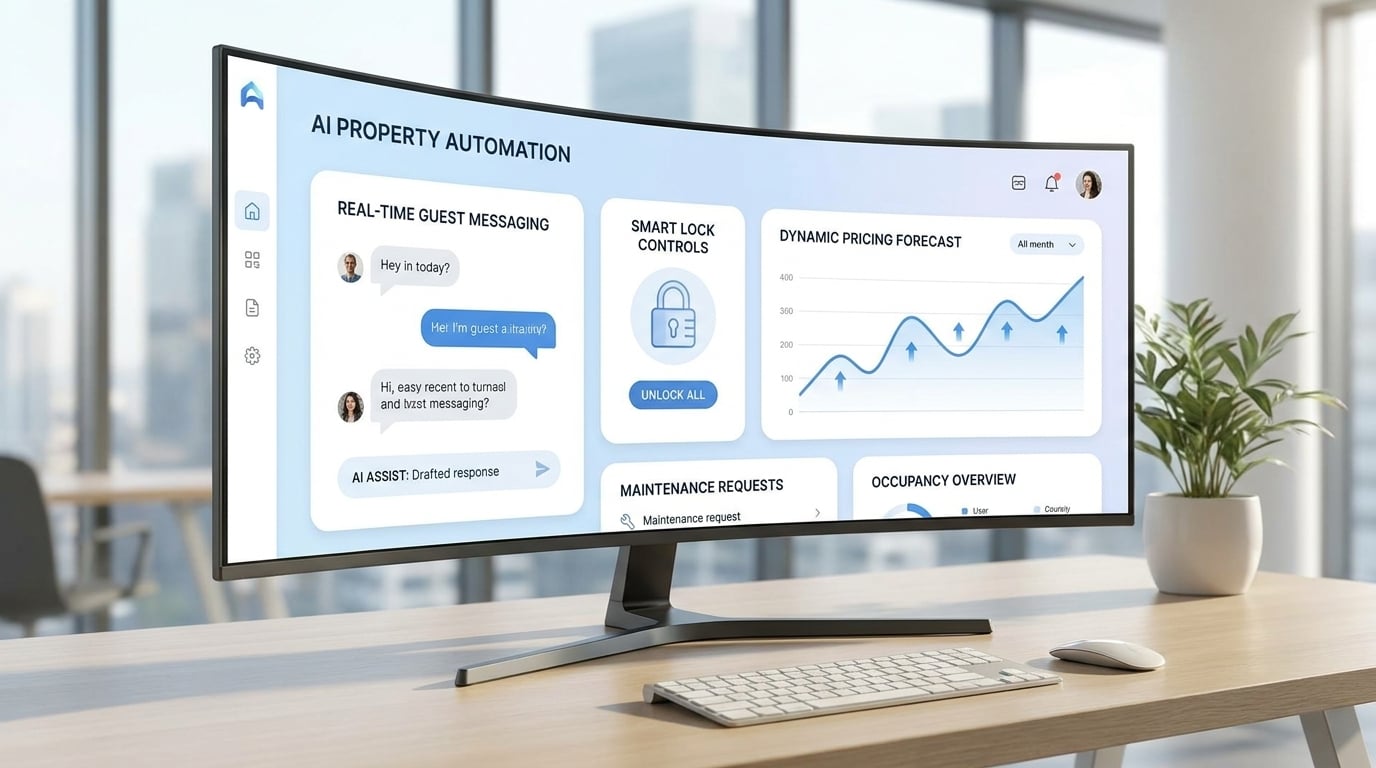
The thing about automation tools is that they all work perfectly in demos. The automated messages fire on schedule, the calendar syncs cleanly, the pricing updates look correct. Everything is smooth because demos are designed to be smooth.
The real test of an automation tool is not whether it works in a controlled environment. It is whether it works when you have fifteen properties checking out on a Saturday morning, your cleaning team is running behind on three of them, a guest at a fourth is locked out because the smart lock battery died overnight, and your revenue management tool just pushed a rate change that did not propagate to one of your Vrbo listings. All of this, simultaneously, at 9am.
At fifteen properties, an automation tool that handles 70 percent of scenarios reliably is genuinely valuable. At thirty, that same tool — handling the same 70 percent — is responsible for the 30 percent it misses becoming your morning.
Here is what actually scales, and what does not.
What Works at 15 Properties — and Why It Breaks at 30
Most operators who have scaled from five to fifteen properties have already made their first serious investment in automation. They have a messaging tool that handles check-in instructions and basic guest questions. They have a pricing tool that updates rates based on demand signals. They have a cleaning app that their team uses to track turnover status. They may have a separate guest verification tool and a channel manager.
At fifteen properties, this stack is manageable. The tools are siloed, but the volume is low enough that a single person can oversee the gaps between them. When the messaging tool does not know the cleaning status, someone checks manually. When the pricing tool does not sync with one channel, someone catches it on the dashboard. The errors happen, but they are contained.
The breaking point is not a specific property count. It is when the volume of gaps between your tools exceeds the bandwidth of the people managing them. For most operators, this happens somewhere between fifteen and twenty-five properties. The tools that worked at fifteen are the same tools — they just have more opportunities to fail, and fewer human hours available to catch and correct each failure.
The 6 Automation Categories and What Scaling Reveals About Each
Guest Communication
The most time-intensive automation category and the one where the gap between adequate and excellent is most visible at scale. A messaging tool that sends scheduled templates handles the predictable scenarios. What it cannot handle — and what consumes the time you do not have — are the questions your templates did not anticipate.
At fifteen properties, you can answer those manually without too much pain. At thirty, you cannot. The tools that scale in this category are the ones that can handle novel questions intelligently, using real-time context about the property, the reservation, and the guest — not just fire pre-written sequences. A true unified AI inbox that resolves 95 percent of messages across all channels is the benchmark. Everything below that requires proportionally more human time as you grow.
Cleaning and Operations Coordination
This is the automation category that causes the most guest-facing failures when it breaks down. If checkout does not automatically trigger a cleaning assignment, someone has to trigger it manually. At fifteen properties, that is a manageable process. At thirty, on a day with twenty simultaneous turnovers, it is a full-time job by itself — and any missed trigger is a guest arriving at an unprepared property.
The tools that scale here are the ones with direct, automatic connections between your reservation system and your housekeeping system — not a webhook that sometimes fires and sometimes does not, but a native integration where checkout is the trigger and cleaning assignment is the automatic consequence.
Revenue Management and Pricing
Manual pricing does not scale. At fifteen properties across three markets, you might be able to review and adjust rates weekly. At thirty, you would need to do this daily to stay competitive, and the data inputs required — demand signals, competitor rates, event calendars, occupancy trends — are too numerous to process manually with any reliability.
Dynamic pricing connected to real-time market data is not optional infrastructure at scale. It is the floor. The ceiling is a pricing system that is also integrated with your occupancy data, your cleaning schedule, and your gap-fill strategy — adjusting not just for demand but for the specific operational realities of your portfolio.
Guest Verification and Screening
At fifteen properties, manual verification review is possible. At thirty, the volume makes it impractical to maintain a consistent standard without automation. Automated guest screening that runs as an integrated part of the booking flow — not a separate tool someone has to remember to check — is the standard that scales. Any process that depends on a human remembering to do something will eventually not be done.
Upsells and Revenue Optimization
Generic upsell campaigns — the same early check-in offer to every guest — convert at three to five percent. That number is not bad. It is just not good enough to justify the infrastructure required to deliver it. The automation tools that scale in this category are the ones that personalize offers based on who the guest is, why they are staying, and what they booked. AI-driven upsell systems that draw on guest history and booking context convert at twenty-five to forty percent — a ten-fold difference that compounds with every booking across every property.
Review Management
Responding to reviews manually at thirty properties, where a conscientious operator might receive forty or fifty reviews per month, is neither scalable nor the best use of the time it requires. The automation tools that matter here are the ones that generate personalized responses — referencing specific details from the stay — automatically, for every review, on every platform. Generic automated responses are worse than no response in many cases. Personalized automated responses are indistinguishable from human-written ones.
Why Connected Automation Outperforms Best-of-Breed at Scale
There is a common approach to building an automation stack that goes: find the best tool in each category and connect them together. Best messaging tool. Best pricing tool. Best cleaning app. Best verification service. In theory, this gives you best-in-class performance across every category.
In practice, the connections are the problem. Every API integration between tools is a potential failure point, a potential lag, and a potential data inconsistency. The guest messaging tool that does not know the cleaning status because the cleaning app has not synced yet. The pricing tool that pushed a rate change that has not yet propagated to the channel manager. The verification service that flagged a guest, but the flag is not visible in your PMS until the next sync.
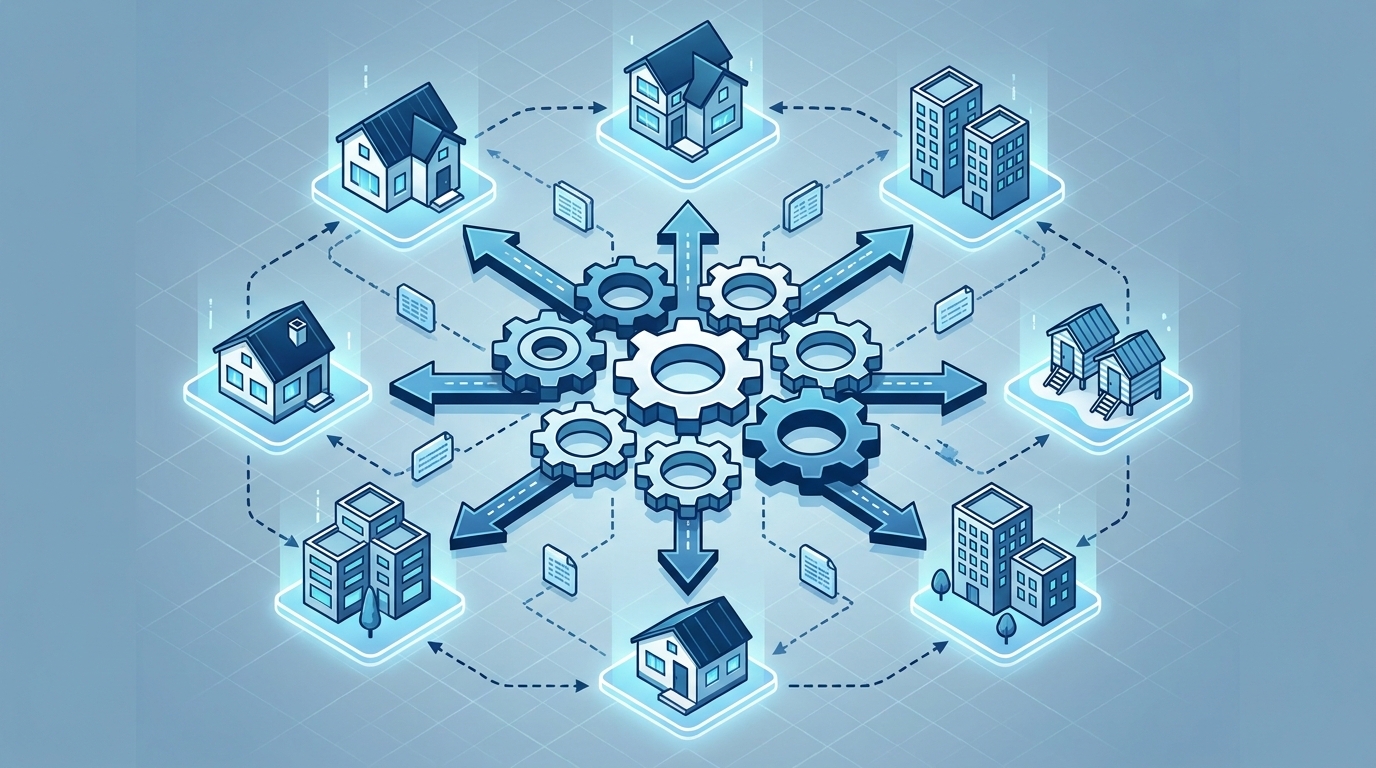
At thirty properties, you are not managing six tools. You are managing six tools and fifteen integration points. And unlike the tools themselves, the integration points do not come with support contracts or SLAs.
Inside Jurny, the automation is connected by design. NIA — the AI layer — has access to everything: cleaning status, room availability, guest history, pricing, access codes, verification status, policies. When a guest sends a message, NIA does not need to query three separate systems. It already knows. When a checkout triggers a cleaning, the confirmation updates room status immediately, which updates the channel availability immediately, which triggers the next guest's check-in instructions automatically.
The question is not whether automation tools work. It is whether the automation you have built will work consistently at the scale you are building toward.
Book a demo with Jurny and bring your real-world scenario — the Saturday with fifteen checkouts, the locked-out guest at 9am, the rate sync that missed a channel. Those are the tests that matter.
Explore Jurny: