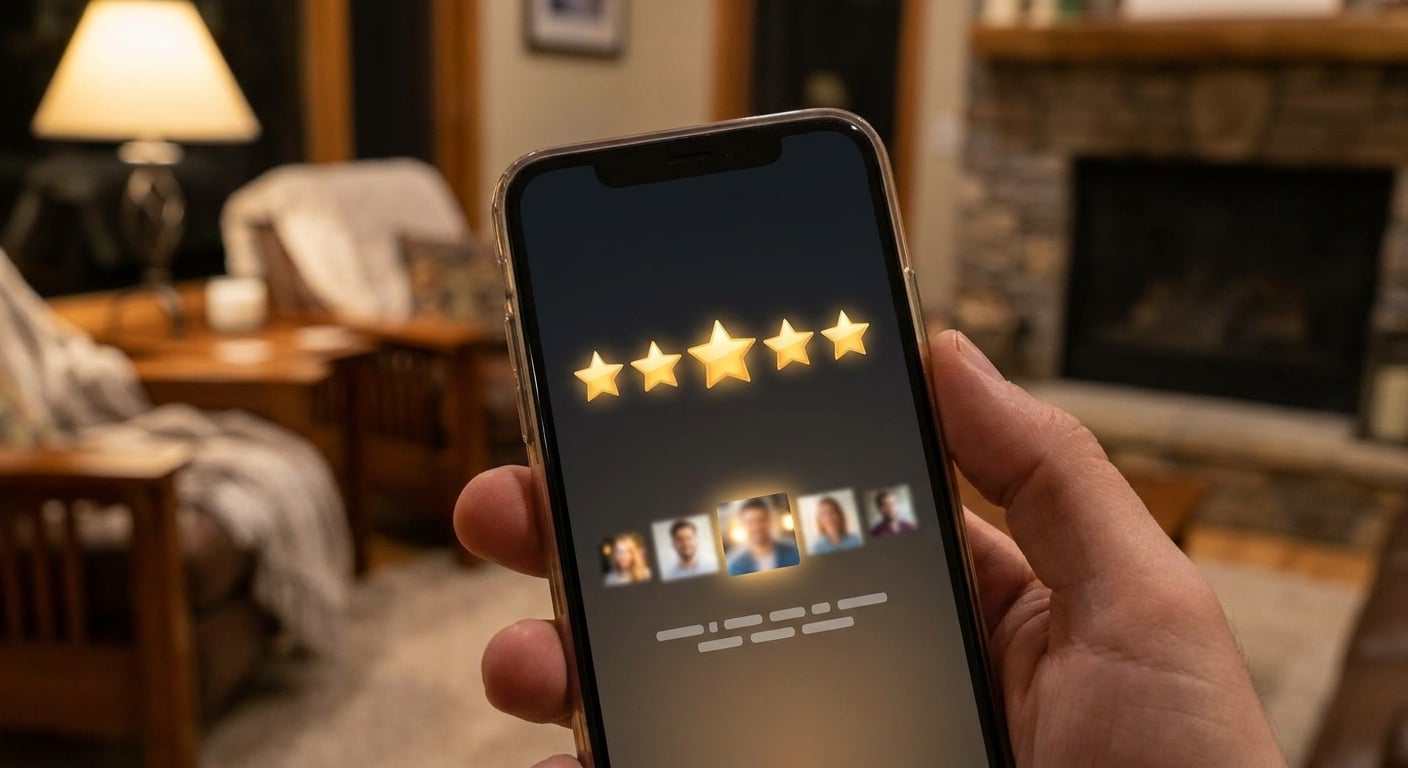

There is a pattern that shows up consistently among short-term rental operators who scale past twenty properties: their review scores drop.
Not dramatically. Not overnight. But a 4.92 average becomes a 4.85 within three months. A 4.85 becomes a 4.78 by month six. To guests browsing Airbnb, that difference is invisible. To the algorithm, it is not. And to the operator who built their business on a reputation for exceptional hospitality, it feels like a betrayal of everything they worked to establish.
The instinct is to blame growth itself — to conclude that the personal touch that made the first ten properties work cannot be replicated at twenty-five. That is the wrong conclusion. The operators who maintain 4.9 averages at thirty and forty and fifty properties are not doing something magical. They are doing something systematic. And the operators whose scores slip are not suddenly worse at hospitality. They are running systems designed for a scale they have already surpassed.
What the Drop Actually Looks Like
The review score decline that comes with unmanaged scaling follows a predictable pattern. It is not driven by one catastrophic failure. It is driven by an accumulation of small, preventable consistency failures that your systems at scale cannot catch reliably.
Response time is the first thing to go. At ten properties, you can personally monitor your inbox and respond within minutes. At twenty-five, with messages coming in across Airbnb, Vrbo, and Booking.com simultaneously, response times start to drift. A guest who waited 45 minutes for an answer to a question they asked on arrival day does not leave a bad review because of the 45-minute wait. They leave it because the experience felt impersonal, unprepared, and inconsistent with what the listing promised.
Cleaning consistency is the second. At small scale, you know your cleaners personally, you can spot-check regularly, and you catch issues before guests arrive. At twenty-plus properties, you are dependent on systems and processes rather than personal oversight. When those systems have gaps — missed handoffs, no real-time completion confirmation, no way to flag an issue before check-in — a guest occasionally arrives at a property that is not ready. It does not happen often. But it happens enough.
The third driver is unresolved in-stay issues. A guest mentions in passing that the shower pressure is low, or that one of the bedroom blinds is broken, or that the Wi-Fi keeps dropping. At small scale, you follow up. At large scale without the right tools, that message gets resolved, marked done, and the underlying issue never gets fixed. The next guest arrives, experiences the same problem, and leaves the same feedback. Your response to their review says "we've addressed this" — but you have not, because your system did not flag the recurring pattern.
The Operators Who Maintain 4.9 at Scale — What They Do Differently
The operators with the best review scores at large portfolio sizes share a specific operational characteristic: they catch problems before guests experience them.
This sounds obvious. In practice, it requires proactive sentiment analysis running on every guest interaction — not just formal reviews, but in-stay messages — that flags negative sentiment before it crystallizes into a formal complaint or a public review. A guest who says "the Wi-Fi seems a little spotty today" is giving you an opportunity. Without a system that recognizes that as a signal requiring action, that opportunity disappears, and you find out about the problem when the review is already posted.
The second thing high-score operators do is maintain genuine consistency in the basics — cleanliness, accurate listings, responsive communication — not through personal supervision but through automated systems that make inconsistency difficult. AI-powered guest communication that responds within seconds, at any hour, in any language, eliminates the response time complaints entirely. Automated cleaning handoffs that confirm completion before the next guest's check-in eliminate the unprepared property complaints.
The third differentiator is the review response. Most operators at scale use generic templates. Guests read them and know immediately that no one personally read their review. The operators maintaining elite scores at scale respond to every review with a response that references something specific from the stay — a detail, a moment, a preference the guest mentioned. This is not possible to do manually at forty properties. It requires an AI system that has access to the full stay record and can generate a personalized response automatically.
Building a Review System That Scales Without You
The goal is not to personally maintain a 4.9 rating across fifty properties. That is impossible. The goal is to build systems where the conditions that produce 4.9 ratings are maintained automatically, and the conditions that produce 3-star reviews are caught and corrected before they reach the guest.
That requires four things working together: fast, accurate, context-aware guest communication; reliable cleaning and operations handoffs; proactive issue detection before checkout; and personalized review responses after. None of these require you personally. All of them require that your systems have access to the right data at the right time.
Inside Jurny, NIA runs sentiment analysis on every guest interaction in real time. When a guest expresses frustration — even in a casual, non-formal way — NIA flags it, routes it to the appropriate team, and tracks whether the issue is resolved before the guest checks out. The same system that handles guest messaging handles maintenance escalations, cleaning confirmations, and review responses. Everything shares the same data. Nothing falls through a gap between tools.
The operators who maintain 4.9 at thirty, forty, and fifty properties are not better hosts than you. They built better infrastructure. Book a demo to see what that infrastructure looks like in practice.
Explore Jurny: