Why Agentic AI Requires a New Playbook
Most hospitality teams say they want automation. What they actually deploy is assistance—tools that reply faster, surface data quicker, or reduce a few manual steps.
NIA 3.0 is not built for that world.
It operates as an agentic AI system, meaning it doesn’t just help humans do work—it does the work itself, across departments, systems, and decisions. That shift fundamentally changes how operators must think about setup, control, and scale.
The teams that struggle with NIA don’t struggle because it’s too advanced. They struggle because they try to run it like a traditional PMS feature.
What Breaks When AI Is Treated Like a Tool
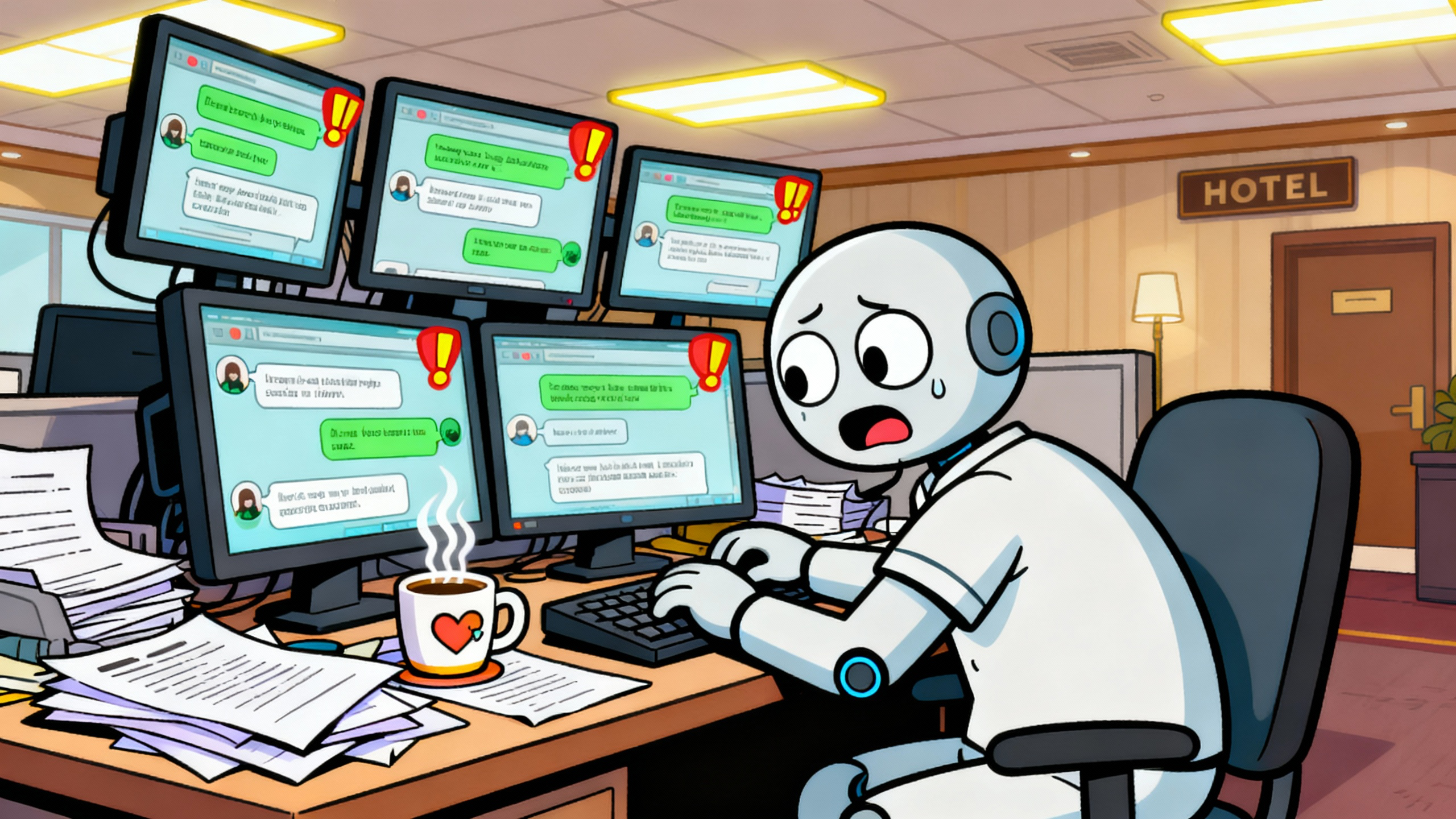
When AI is deployed as “just another feature,” a few things happen:
-
Automation stops at the first edge case
-
Humans remain the coordination layer
-
Work speeds up but doesn’t disappear
-
Errors move faster instead of being eliminated
This is why many operators feel burned by AI promises.
NIA 3.0 is designed to replace coordination, not just labor. To unlock that value, operators must stop thinking in tasks and start thinking in outcomes.
Best Practice #1: Design for Outcomes, Not Tasks
The most common mistake is asking, “What should NIA automate?”
The better question is:
“What outcome should always be true?”
Examples:
-
Guests get answers before they follow up
-
Units are ready before check-in windows
-
Upsells are offered only when relevant
-
Issues are resolved before they escalate
When you define outcomes, NIA determines the sequence of actions required—messaging, task creation, scheduling, escalation, follow-up—without human intervention.
This is the core difference between short-term rental automation and agentic AI.
Best Practice #2: Give NIA Full Ownership of Workflows
Partial automation creates hidden work.
If NIA can:
-
Respond to a guest
but not -
Adjust a reservation
-
Trigger housekeeping
-
Offer compensation
-
Escalate intelligently
Then humans are still managing the system.
NIA 3.0 works best when entire workflows are owned by agents:
-
Guest messaging from inquiry to checkout
-
Housekeeping from booking to turnover
-
Upsells from eligibility to fulfillment
-
Reviews from response to operational feedback
This is how teams eliminate handoffs, not just speed them up.
Best Practice #3: Encode Judgment, Not Scripts
Scripts fail the moment reality changes.
NIA 3.0 is built to operate on judgment patterns, not rigid rules:
-
When to escalate vs. resolve
-
When to comp vs. apologize
-
When to offer an upsell vs. stay quiet
Operators should focus on teaching NIA how decisions are made, not writing endless if/then logic. Over time, the system executes those decisions consistently—without fatigue, drift, or inconsistency.
This is where AI property management software becomes safer, not riskier.
Best Practice #4: Use Co-Pilot as the Operating Layer
NIA Co-Pilot is not a chatbot. It’s the command interface for the entire system.
Best-in-class teams use Co-Pilot to:
-
Ask operational questions in plain language
-
Trigger actions across departments instantly
-
Summarize issues, risks, and performance
-
Override or guide decisions when needed
Instead of logging into multiple tools, operators interact with the system conversationally—while NIA handles execution behind the scenes.
That’s how complexity disappears without sacrificing control.
Best Practice #5: Standardize First, Then Scale
Many teams want to “test” AI on a few units.
That approach backfires.
Agentic AI scales best when:
-
SOPs are standardized
-
Exceptions are intentional, not accidental
-
Data flows are consistent
NIA 3.0 doesn’t struggle with volume. Humans do.
When standards are clear, NIA absorbs growth without added headcount—whether that’s 20 units or 2,000. This is how AI PMS platforms protect margins instead of compressing them.
Best Practice #6: Let the System Learn and Improve
NIA 3.0 is not static automation.
It continuously:
-
Analyzes outcomes
-
Detects recurring issues
-
Improves timing, tone, and decisions
Operators who get the most value don’t micromanage execution. They review insights, adjust strategy, and let the system refine itself.
The result is compounding efficiency—not just faster work, but better work.
What Operational Excellence Looks Like With NIA 3.0
When NIA 3.0 is deployed correctly:
-
90%+ of guest communication resolves without humans
-
Housekeeping and maintenance self-coordinate
-
Upsells feel helpful, not pushy
-
Reviews feed directly into operational improvements
-
Teams stop firefighting and start managing outcomes
Jurny isn’t another tool. It’s an agentic operating system that executes work across messaging, reviews, pricing, turnovers, and upsells—end to end.
FAQs
What makes NIA 3.0 different from traditional AI tools?
NIA 3.0 executes complete workflows and outcomes instead of assisting isolated tasks.
Do operators lose control with agentic AI?
No. Control shifts from manual execution to strategic oversight via Co-Pilot.
Can NIA 3.0 scale across large portfolios?
Yes. It’s designed to operate consistently across hundreds or thousands of units.
Is NIA 3.0 suitable for boutique operators?
Yes. Smaller teams benefit immediately from reduced manual workload and faster execution.
Ready to replace task-chasing with outcomes? Book a demo.
Explore Jurny: