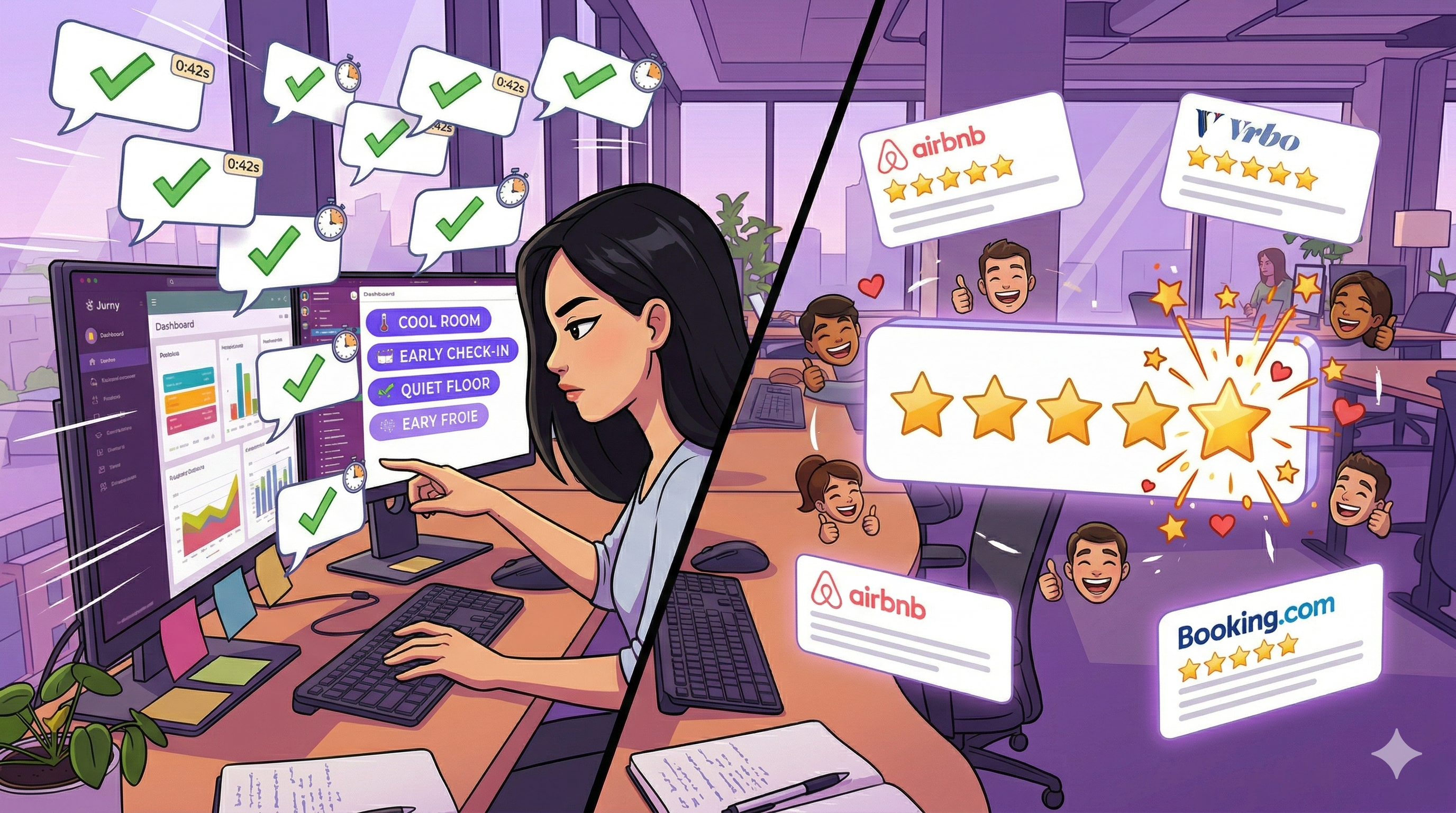

You know the message. It arrives at 9 pm when you are finally off-duty: 'Hi, quick question — what's the WiFi password?' You sent it in the booking confirmation. It is in your automated check-in message. But somehow, it is still the most frequently asked question you receive.
Now multiply that by: 'Where should we park?', 'What time is checkout again?', 'Is there a coffee maker?', 'Any good restaurants nearby?' Each message is another notification, another interruption, another minute you are not getting back.
A well-designed digital guidebook eliminates 60–80% of these repetitive questions before they are asked — and sets your property apart as a professionally managed, guest-first experience.
|
TL;DR A digital guidebook is a mobile-accessible welcome guide sent to guests before arrival containing everything they need: check-in instructions, WiFi, house rules, local recommendations, and upsell offers. It reduces guest messages, improves review scores, and can be fully automated. |
What Is a Digital Guidebook for Vacation Rentals?
A digital guidebook — also called a digital welcome book or guest guide — is a web-based document that replaces the binder on the kitchen counter. Guests access it from their phone via a link sent before arrival, giving them everything they need for a seamless stay without contacting you.
Unlike a PDF or paper document, a digital guidebook is:
- Interactive and mobile-optimized — guests use it on the device they already have
- Easy to update without reprinting anything — change the WiFi password in two minutes
- Trackable — you can see if guests have opened it before check-in
- Brandable — it reflects your property and management company professionally
- A revenue tool — upsells can be embedded directly in the guide
What to Include in Your Vacation Rental Digital Guidebook
1. Check-In Instructions
Step-by-step arrival instructions are the single most important section. Include: the exact address, parking instructions, door code or smart lock instructions (with a photo if possible), where to find the key or lockbox, and who to call if there is an issue getting in. Be specific — do not assume anything is obvious.
2. WiFi and Tech
Network name and password at the top in large font. Also document: smart TV instructions, how to adjust the thermostat, and how to use any smart home devices in the property. Guests ask about WiFi more than anything else.
3. House Rules and Important Policies
Keep this section clear and firm, not apologetic. Quiet hours, parking rules, pet policies, smoking policy, trash and recycling instructions, checkout procedures, and anything that could result in a damage charge if ignored.
4. Property Essentials
Where to find: extra towels and linens, cleaning supplies, trash bags, coffee and kitchen basics, emergency contact for the property. Answering these in advance eliminates a category of messages entirely.
5. Local Area Guide
This is where you differentiate from a hotel. Your 5–10 favorite restaurants with links, grocery stores nearby, coffee shops, local attractions, parking tips for the area, and anything that makes the location special. Guests mention this section in reviews when it is genuinely personal.
6. Checkout Instructions
Be specific: what time, what to do with linens, whether to start the dishwasher, where to leave the keys. Clear checkout instructions directly reduce damages, late checkouts, and cleaning issues.
7. Upsells
A digital guidebook is also a low-friction revenue tool. Early check-in, late checkout, mid-stay cleaning, local experience packages, grocery delivery — all can be offered directly through the guidebook before the guest even arrives, when they are actively planning their stay.
Digital Guidebook vs. Paper Welcome Binder
A paper binder gets coffee spilled on it, goes out of date the moment you change the WiFi password, and cannot be sent before arrival. A digital guidebook is always current, sent proactively, and accessible on the device guests are already using.
Properties with digital guidebooks consistently report fewer inbound messages and higher review scores — because guests feel informed, prepared, and well cared-for before they even check in.
How to Automate Your Digital Guidebook Delivery
The most effective approach is to make guidebook delivery automatic. With Jurny's automated messaging system, the guidebook link is included in the pre-arrival message triggered 24–72 hours before check-in — no manual step required for any booking on any channel.
Jurny's branded guest web app takes this further: guests receive a personalized, mobile-optimized experience that includes the guidebook, upsell offers, support access, and checkout instructions — all under your brand, not a third-party platform's interface.
Frequently Asked Questions
What is the best format for a vacation rental digital guidebook?
A web-based link — not a PDF attachment — is the most accessible format. It loads instantly on mobile, does not require downloading, and can be updated in real time without resending to past guests.
When should I send the digital guidebook to guests?
Send it 24–72 hours before check-in — far enough in advance that guests can review it before arrival, but close enough that it feels timely. Use automated messaging to deliver it consistently without manual effort for every booking.
Will a digital guidebook actually reduce guest messages?
Yes, significantly. Properties that implement comprehensive digital guidebooks report 40–70% reductions in repetitive pre-arrival and during-stay messages. The guidebook answers questions before guests think to ask them.
Can I include upsells in my digital guidebook?
Absolutely — and you should. Embedding early check-in, late checkout, and local experience offers in the guidebook is one of the highest-converting upsell delivery methods because guests are engaged and planning their stay when they read it.
How often should I update my digital guidebook?
Review it at minimum quarterly, and update immediately whenever WiFi passwords, door codes, or property essentials change. Digital formats make this a two-minute task instead of a full reprint and redistribution exercise.
See how Jurny's branded guest web app delivers your digital guidebook automatically at every booking.
Explore Jurny: