
There is a specific moment when most short-term rental operators realize their AI messaging tool is not working. It is not a dramatic failure — no double booking, no furious guest. It is a quiet realization, usually during a busy weekend, that despite having an "AI" handling their inbox, they are still spending two hours a day answering messages.
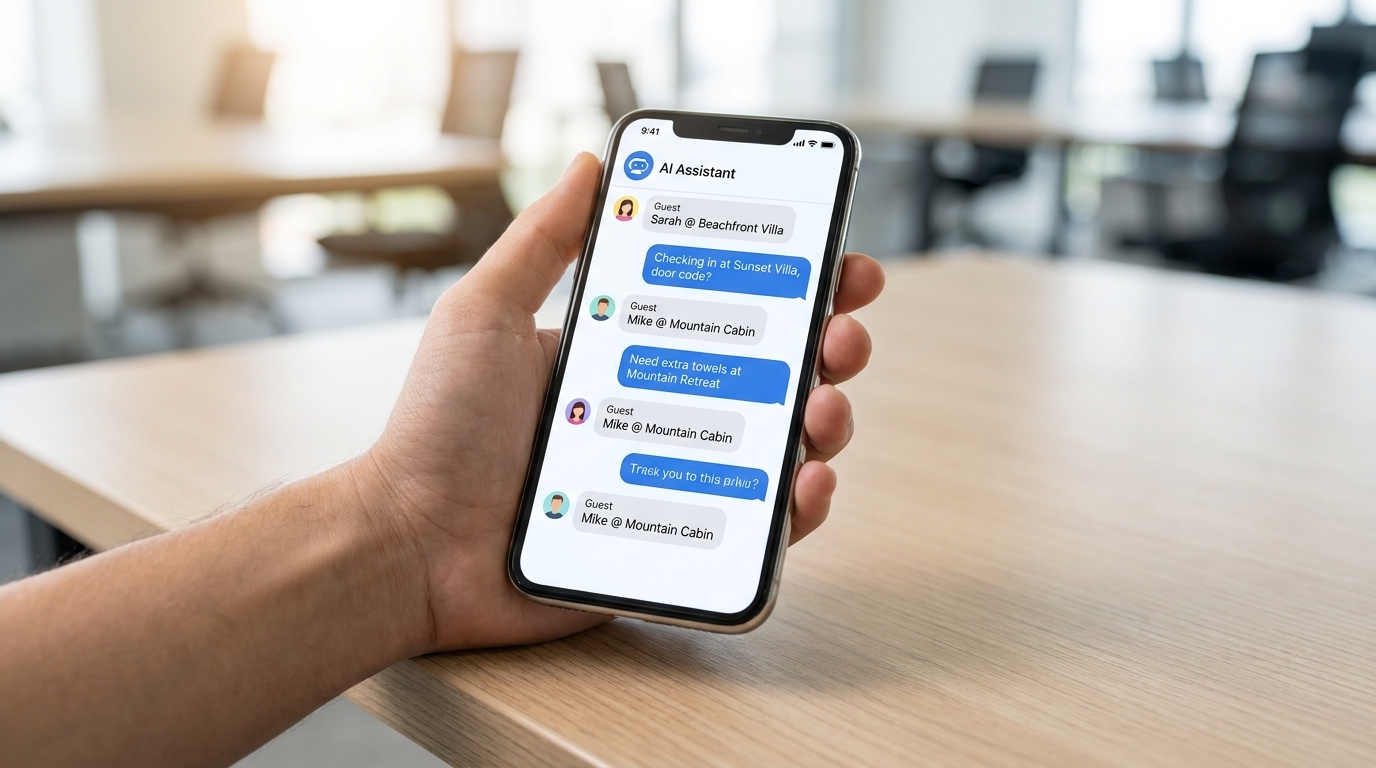
The AI is answering some questions. The common ones, the predictable ones, the ones that appeared in the knowledge base during setup. But the guest at 9pm asking whether the parking situation has changed since they booked, the guest on day three asking about the nearest urgent care, the guest arriving in three hours asking if their specific early check-in has been confirmed — those still land in the human queue. Every time.
For operators managing fifteen or more properties, the gap between what an AI messaging tool promises and what it delivers is not a minor inconvenience. It is a structural constraint on how large your portfolio can realistically grow.
What the Right AI Messaging Tool Actually Does
An AI messaging tool built for operators at scale resolves guest inquiries that a generic chatbot cannot — not because it has a larger FAQ database, but because it has access to the operational context that makes those inquiries answerable.
The parking question gets resolved because the AI has the current parking instructions for that specific property, not a generic template. The urgent care question gets answered because the AI has been configured with the neighborhood context for each property in the portfolio. The early check-in question gets resolved because the AI can see the live cleaning status and knows whether the property is actually ready.
This level of resolution requires the AI to have access to property-specific data that most standalone messaging tools simply do not have — because they are separate products connecting to the PMS via API, with access only to what the API exposes.
The 15-Property Threshold
Below fifteen properties, an AI tool that resolves 60 percent of messages is genuinely helpful. The remaining 40 percent — at lower volume — is manageable. Above fifteen properties, that same 60 percent automation rate means your team is handling 40-plus messages per day manually. That is a part-time job created by the gap in your AI's capabilities.
The operators who have scaled successfully past thirty and fifty properties have consistently moved to platforms where the AI resolves 95 percent or more of inquiries — not because they found a better chatbot, but because they moved to a platform where the AI has access to the full operational context it needs to answer questions accurately.
What to Evaluate
When evaluating AI messaging tools for a portfolio of fifteen or more properties, the questions that matter are operational:
- Can the AI see live cleaning status and room availability when responding to early check-in requests?
- Can the AI access current access codes and check-in procedures for each specific property?
- Can the AI see a guest's full booking history across all properties in the portfolio?
- What is the documented automation rate from live operations — not a demo — for portfolios at my size?
- How does the AI handle questions it has not been explicitly programmed to answer?
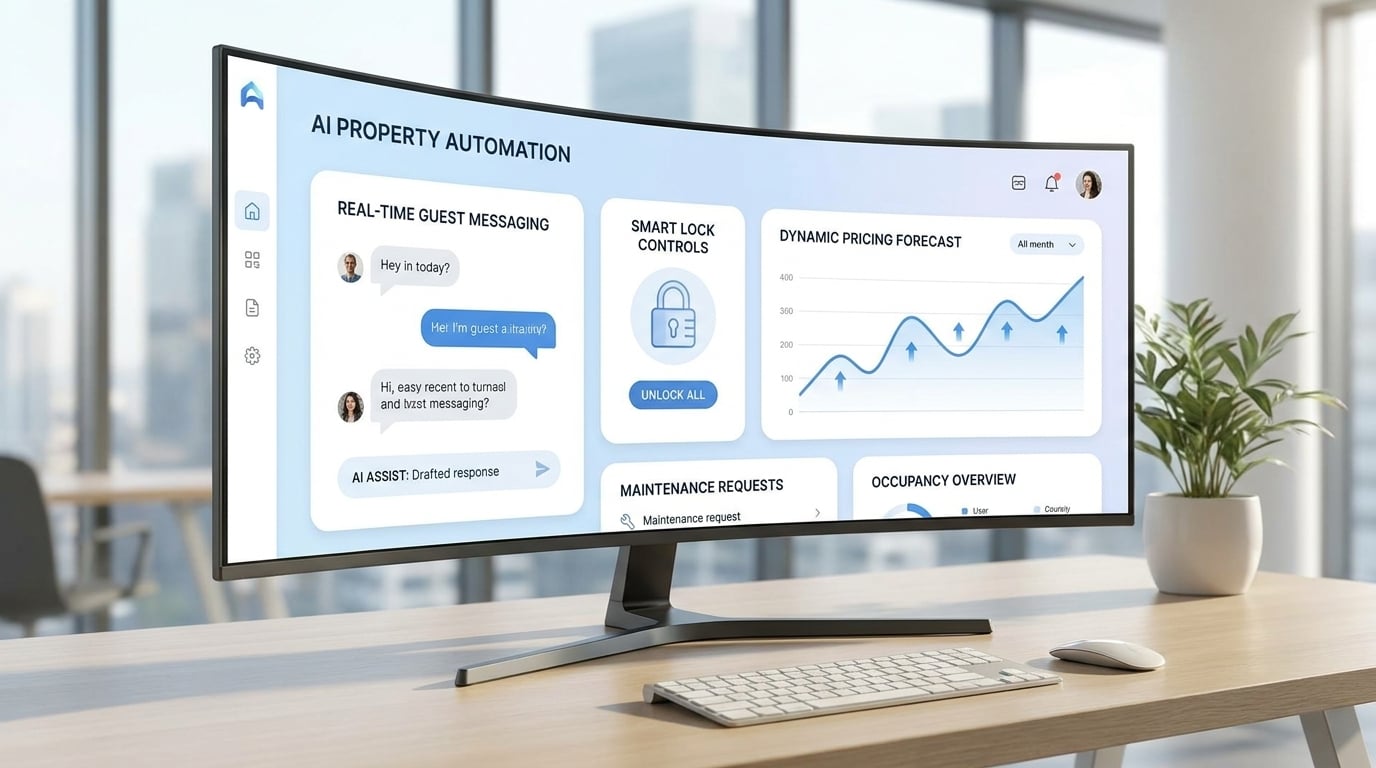
Inside Jurny, the unified AI inbox is built on the same data layer as every other function in the platform. NIA has access to real-time room status, live cleaning schedules, current access codes, guest history, and property-specific policies — which is why it resolves 98 percent of guest inquiries without human involvement.
If you are managing fifteen or more properties and your AI messaging tool still requires significant daily human intervention, the problem is not the AI. It is what the AI can see. Book a demo to see what full-context AI messaging looks like for your portfolio size.
Explore Jurny: